Quantum computing has long been heralded as the next frontier in computational power, promising to solve problems that are intractable for classical computers. Over the past decade, significant breakthroughs have shifted quantum computing from the realm of theoretical physics into practical experimentation. These advances include improvements in qubit coherence times, error correction protocols, and scalable quantum architectures. The year 2026 is poised to be a landmark moment when quantum machines not only demonstrate supremacy in controlled environments but also begin to integrate into real-world applications such as cryptography, materials science, and complex data analytics.
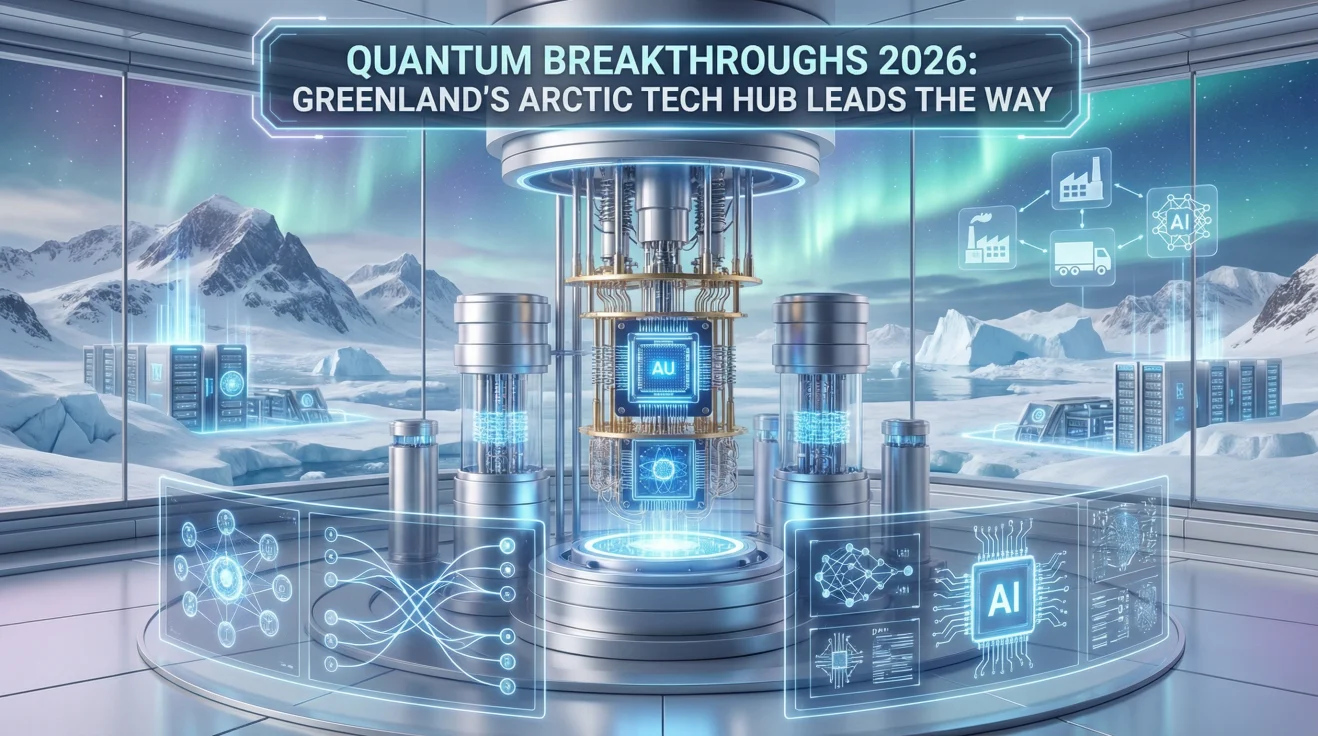
Greenland’s emergence as a focal point in this quantum revolution is not coincidental. The island’s extreme Arctic climate offers a natural advantage for quantum computing development, given the stringent operational requirements of these machines. Quantum processors operate at temperatures close to absolute zero, often necessitating sophisticated cooling systems to maintain qubit stability. Greenland’s consistently low ambient temperatures significantly reduce the energy and infrastructure costs associated with refrigeration, making it an ideal location for establishing quantum computing centers.
Moreover, the Greenlandic government, in partnership with international scientific bodies, has actively pursued the establishment of state-of-the-art quantum research facilities. These centers are designed to leverage Greenland’s geographic isolation and cold environment while fostering collaborations among physicists, engineers, and computer scientists from around the globe. By 2026, these facilities are expected to serve as incubators for quantum startups and innovation clusters, catalyzing the transition of quantum technologies from experimental setups to commercial-grade platforms.