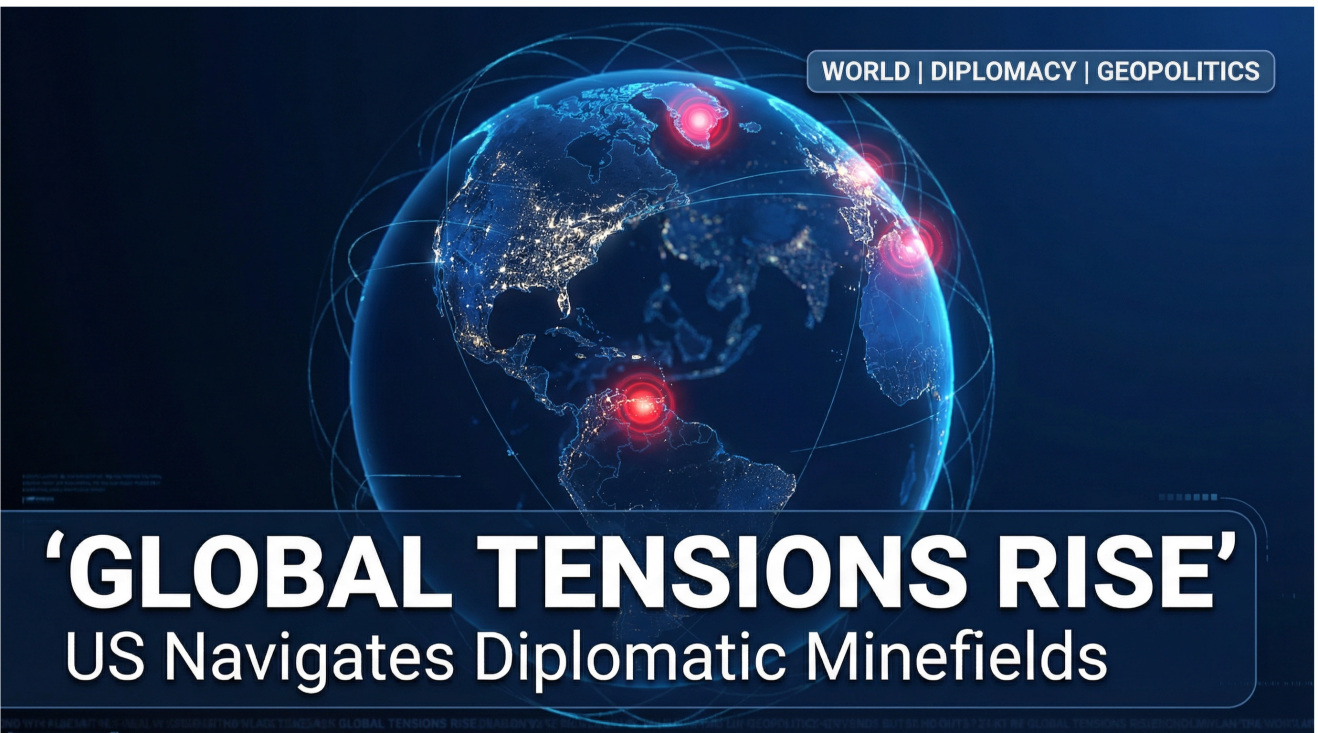
The United States finds itself at the center of multiple international flashpoints as February 2026 unfolds, with diplomatic challenges spanning from the Arctic to the Caribbean to the contested waters of the Western Pacific. The convergence of these crises—combined with the imminent expiration of the New START nuclear arms treaty with Russia—has created what foreign policy experts describe as one of the most complex geopolitical environments in recent memory.
From President Trump’s persistent efforts to acquire Greenland from Denmark to the reopening of the US Embassy in Venezuela following the dramatic removal of Nicolas Maduro, American diplomats are navigating an increasingly volatile international landscape. Meanwhile, escalating tensions in the South China Sea have brought the region closer to open conflict than at any point since the end of the Cold War.
The Greenland Gambit: Arctic Ambitions and Alliance Tensions
President Trump’s campaign to acquire Greenland from Denmark has evolved from what many initially dismissed as an eccentric fixation into a sustained diplomatic initiative that has strained relations with one of America’s oldest NATO allies. The administration has continued to press its case for American control over the strategically vital Arctic territory, citing national security concerns and the island’s vast mineral resources.
Denmark and Greenland’s autonomous government have repeatedly rejected the overtures, with Danish officials expressing frustration at what they view as a disregard for their sovereignty. However, the two nations have sought to maintain broader cooperation on Arctic security issues, with Massachusetts Governor Maura Healey recently signing a collaboration agreement with Danish officials focused on climate research and economic development.
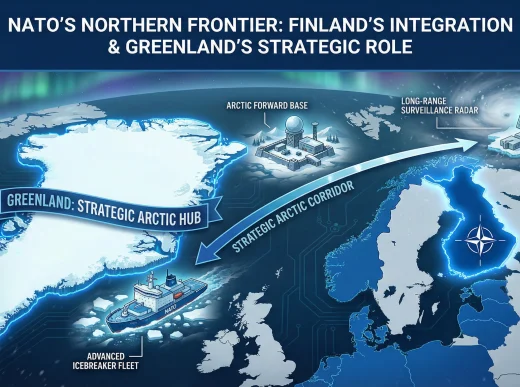
The strategic importance of Greenland has grown significantly in recent years as climate change opens new shipping routes through the Arctic and as competition with Russia and China for polar resources intensifies. The island hosts Pituffik Space Base, a critical installation for US missile defense and space surveillance operations.
Venezuela in Transition: A Fragile Rapprochement
The United States has reopened its embassy in Caracas after a seven-year closure, marking a dramatic shift in relations with the South American nation following the abduction of former President Nicolas Maduro. US envoy Laura Dogu arrived in Venezuela to oversee the restoration of diplomatic operations, signaling Washington’s recognition of the new political reality in the country.
The reopening comes amid negotiations over a significant oil deal that would allow Venezuela to export up to $2 billion worth of crude to the United States. The agreement represents a pragmatic shift in US policy, driven by energy security concerns and a desire to reduce dependence on other oil-producing nations.
The political situation in Venezuela remains fluid, with the post-Maduro government working to establish its legitimacy both domestically and internationally. The United States has signaled its willingness to support the transition, though officials have emphasized that continued engagement will depend on progress toward democratic reforms and respect for human rights.
South China Sea: The Brink of Conflict
Tensions in the South China Sea have reached a dangerous new threshold following a violent incident between Philippine and Chinese forces that left eight Philippine Navy personnel injured, with one sailor losing a thumb in the confrontation. The skirmish represents the most serious clash between the two nations in the disputed waters and has raised alarm about the potential for escalation to open conflict.
“The death of any Filipino by a wilful act in the disputed waters could be considered close to an act of war.”
— Philippine President Ferdinand Marcos Jr.
President Marcos’s stark warning underscores the gravity of the situation and the narrowing margin for diplomatic resolution. The Philippines has invoked its mutual defense treaty with the United States, raising the prospect of American military involvement should hostilities escalate further.
China has continued to assert its expansive territorial claims in the region, deploying coast guard vessels and maritime militia to challenge Philippine operations near contested features. The strategic implications extend beyond the immediate dispute, with analysts warning that conflict in the South China Sea could quickly draw in other regional powers and disrupt one of the world’s most critical trade routes.
Nuclear Arms Control in Crisis
Adding to the complexity of the international environment, the New START treaty between the United States and Russia is set to expire on February 4, 2026, with no clear path to a successor agreement. The treaty, which limits the number of deployed strategic nuclear warheads and delivery systems, has been a cornerstone of arms control efforts since its signing in 2010.
Russian President Vladimir Putin has proposed a one-year voluntary extension of the treaty’s central limits, a suggestion that President Trump has described as sounding “like a good idea.” However, significant obstacles remain to formalizing any agreement, including disputes over verification mechanisms and the potential inclusion of China in future arms control frameworks.
The expiration of New START raises the specter of a new nuclear arms race, with both the United States and Russia freed from the constraints that have governed their strategic arsenals for more than a decade. Arms control advocates have warned that the collapse of the treaty framework could lead to a dangerous period of uncertainty and increased risk of miscalculation.
The Unraveling of the Global Order
The convergence of these multiple crises reflects broader shifts in the international system, as the post-Cold War order gives way to a more contested and multipolar world. The United States faces the challenge of managing relationships with both allies and adversaries while navigating an increasingly complex web of competing interests and values.
For American policymakers, the coming weeks will require careful calibration of diplomatic, economic, and military tools across multiple theaters. The stakes could hardly be higher, with the potential for miscalculation in any of these flashpoints to trigger consequences that reverberate far beyond their immediate geographic scope.
As the world watches these developments unfold, the fundamental question remains whether the existing frameworks of international cooperation can adapt to meet the challenges of a new era—or whether the rules-based order that has governed international relations for decades is giving way to something far more uncertain and dangerous.
Key Statistics
- $2 billion: Value of potential US-Venezuela oil export deal
- 8 injured: Philippine Navy personnel hurt in South China Sea clash
- 7 years: Duration of US Embassy closure in Venezuela
- February 4, 2026: Expiration date of New START treaty