View the original Instagram post by Jessica Johnson
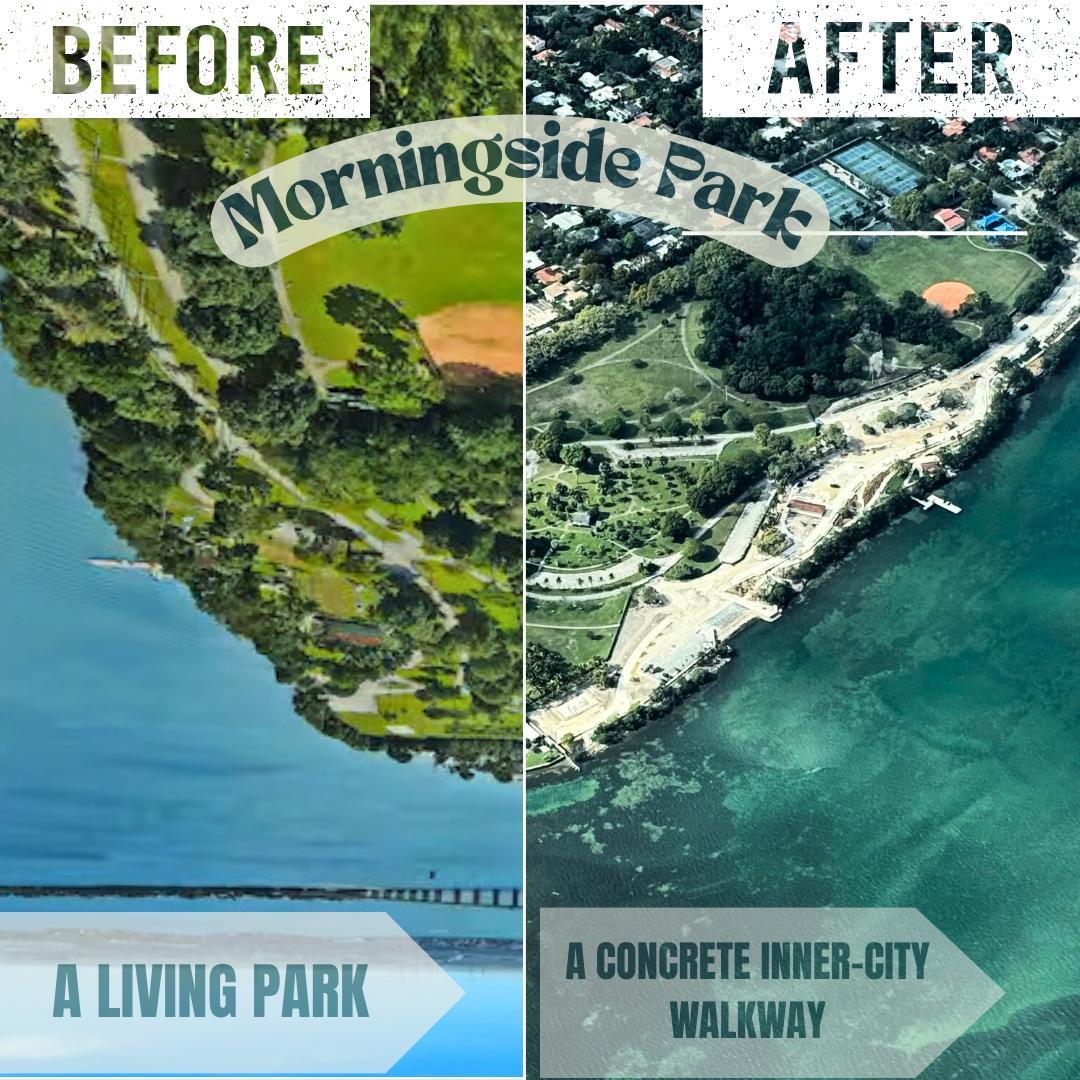
Miami residents are voicing fierce opposition to the transformation of Morningside Park from green infrastructure into concrete walkways, with an Instagram post by environmental advocate Jessica Johnson (doubleagentjj) documenting the dramatic before-and-after comparison and sparking widespread outrage over what critics call “climate-washing” disguised as resilience planning.
Johnson’s post, created in collaboration with Florida Keepers, Sergei Kelley, Christopher Marshall, Sandy Smith Moise, and MiamidadeToday, has garnered over 277 likes and 31 comments, with residents unanimously condemning the project as a betrayal of Miami’s stated climate adaptation goals.
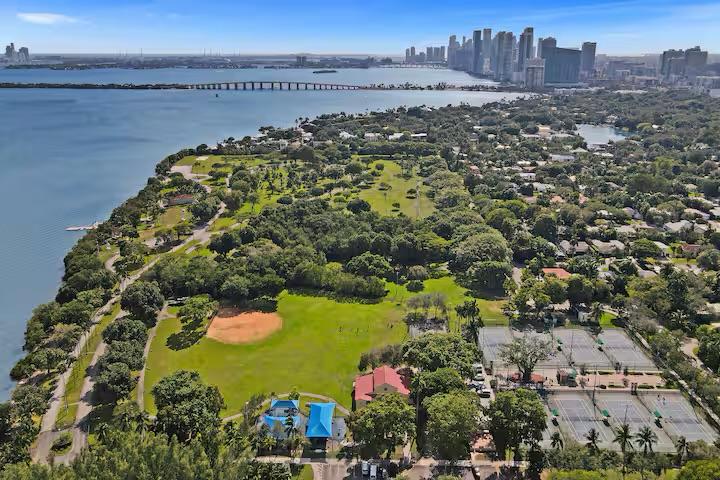
From Green Infrastructure to Concrete Jungle
Morningside Park once served as functional green infrastructure, absorbing rainfall, filtering stormwater runoff, supporting tree health, and providing a natural buffer for Biscayne Bay. The new concrete walkway system disrupts this natural hydrology, converting permeable surfaces into impervious hardscape that accelerates stormwater runoff directly into the bay.
In a coastal city facing escalating flooding challenges from king tides, sea-level rise, and intensifying storm systems, the replacement of water-absorbing green space with concrete represents what environmental advocates describe as the opposite of climate resilience.
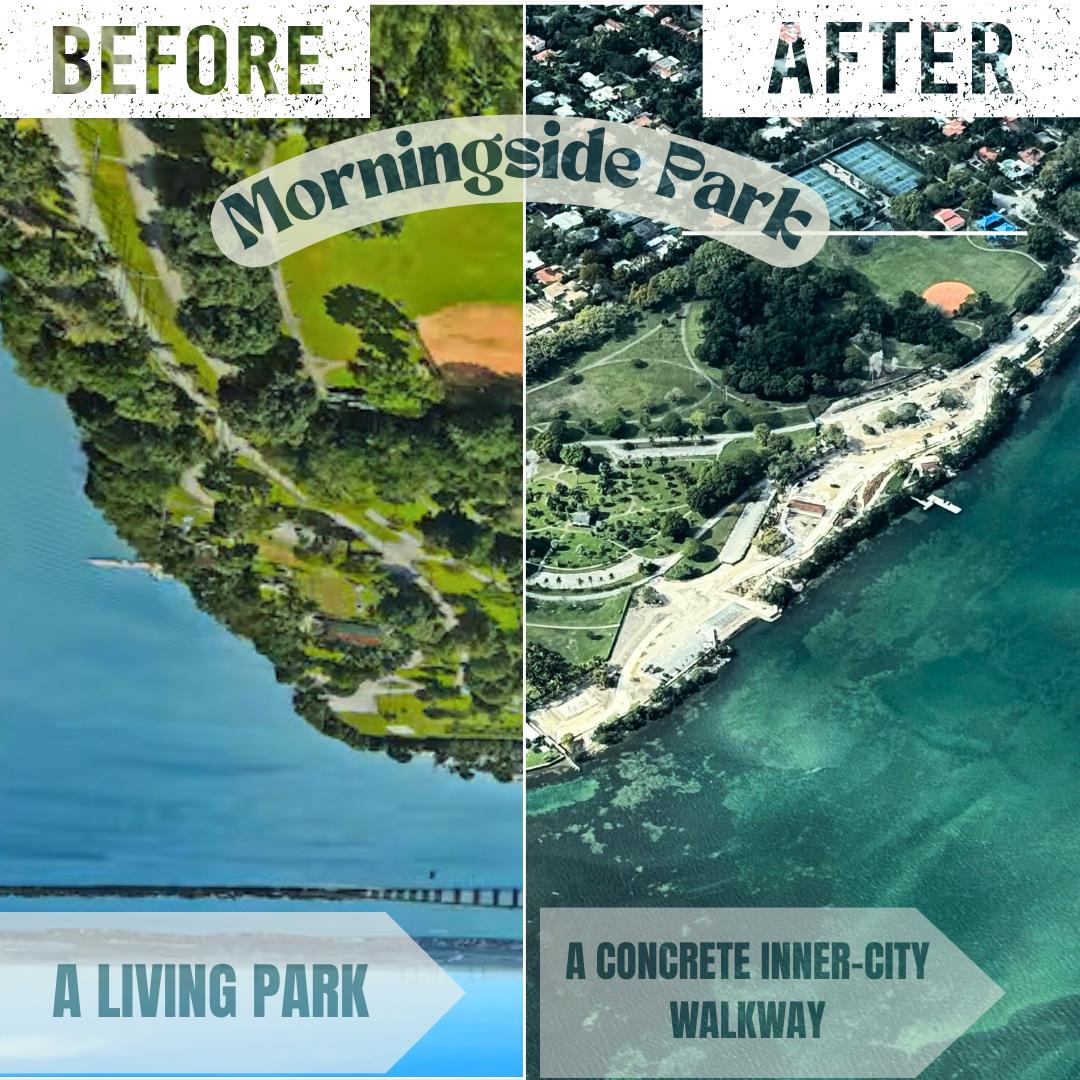
Johnson articulates the core contradiction in her Instagram post: “Parks are supposed to absorb water, not accelerate it. Resilience isn’t aesthetics. It’s restraint, ecology, and respecting how water actually moves. Miami can’t climate-wash bad planning decisions.”
Public Backlash Reveals Deep Frustration
The comment section reveals unanimous opposition to the project, with residents expressing anger, dismay, and accusations of political corruption. User dustinseager stated bluntly: “People that propose this shouldn’t have any power to make decisions”—a comment that received 14 likes.
User pzamsey wrote: “Miami is being turned into a concrete jungle. The only green left is in the pockets of the corrupt politicians making deals with the demonic developers”—garnering 14 likes and reflecting widespread suspicion that the project serves private interests rather than public environmental needs.
Multiple commenters referenced what they perceive as a pattern of awarding lucrative concrete contracts to politically connected developers. User junesavage observed: “they gotta give those friends the concrete deals”—a comment that received 5 likes and echoes concerns about the so-called “concrete cartel.”
The emotional response was palpable, with several users posting crying emojis and expressions of grief over the loss of natural space. User littlehavanagirl wrote: “Horrible. Thanks for this comparison. No more concrete in our natural areas” (6 likes).
User sheazepol warned: “Nature is more resilient than concrete. This will not end well for the area’s ecological balance human impact continues to worse” (4 likes).
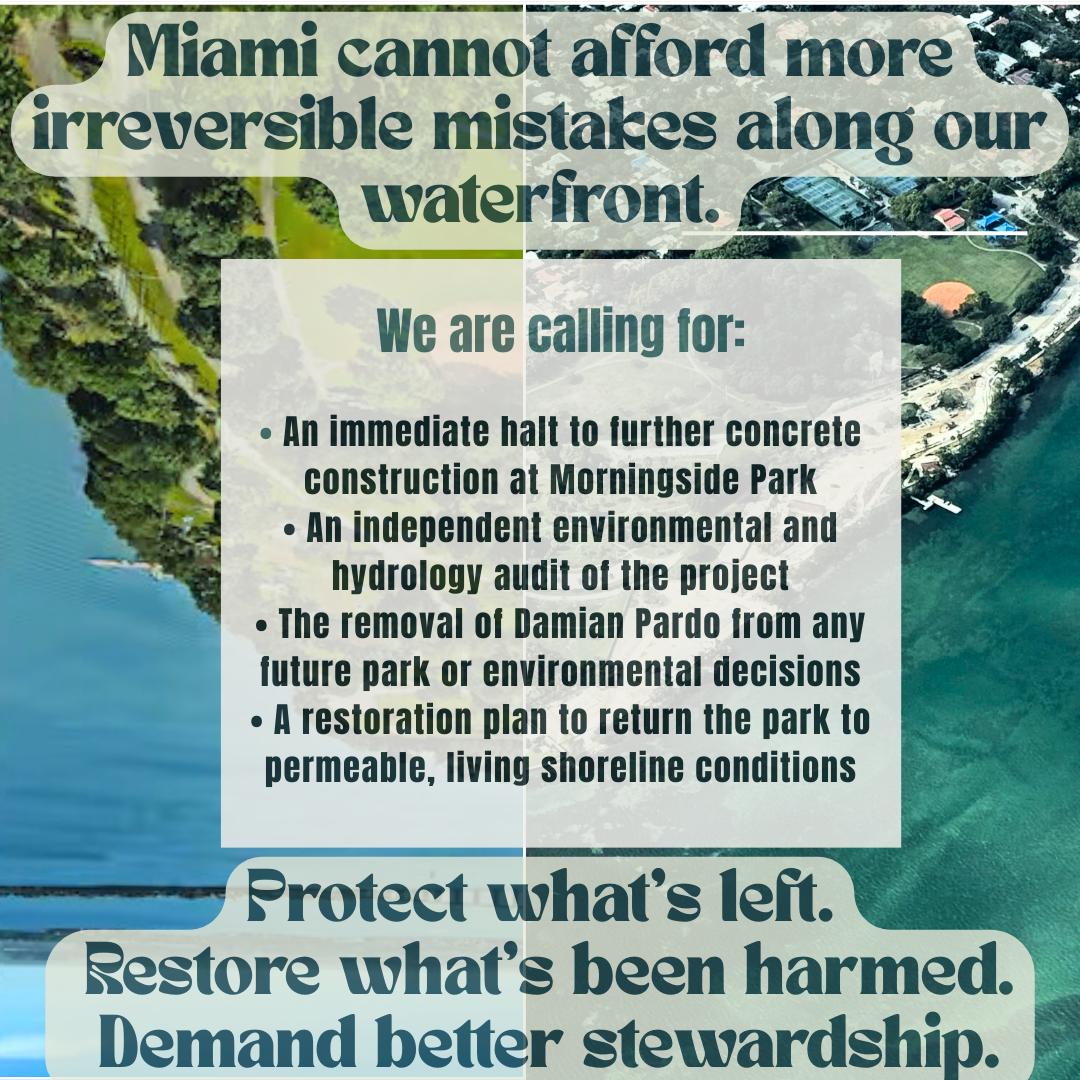
Demands for Accountability and Restoration
Johnson’s post outlines specific demands from concerned residents:
- AN IMMEDIATE HALT TO FURTHER HARD SURFACE / CONCRETE CONSTRUCTION AT MORNINGSIDE PARK
- Damian Pardo (@damianpardomiami) to be kept away from future environmental and park decisions
- An independent environmental and hydrology audit of this project by Mayor Eileen Higgins (@mayoreileenhiggins)
- A restoration plan to return Morningside Park to a living, permeable waterfront
The controversy highlights a fundamental tension in Miami’s approach to climate adaptation. While city officials frequently tout resilience initiatives and climate action plans, critics argue that on-the-ground decisions continue to prioritize conventional development patterns that exacerbate flooding risks and degrade natural systems.
Environmental advocates point out that green infrastructure provides multiple ecosystem services beyond stormwater management, including urban heat island mitigation, air quality improvement, habitat provision, and community health benefits. Converting these multifunctional green spaces into concrete walkways eliminates these services while increasing maintenance costs and flood vulnerability.
The “Concrete Cartel” Pattern
The Morningside Park transformation is being framed by critics as emblematic of a broader pattern they label the “concrete cartel”—a network of development interests, political officials, and contractors who consistently favor hardscape solutions over nature-based alternatives.
The hashtag #concretecartel accompanying the viral post reflects growing public awareness of this dynamic. Residents are increasingly questioning why Miami continues to pursue development approaches that contradict its own stated climate resilience goals.
User theboundbybeautyproject captured this frustration: “You’d think we would learn….” (6 likes). The sentiment reflects exasperation that Miami appears to be repeating mistakes made by other coastal cities that prioritized short-term development over long-term environmental sustainability.
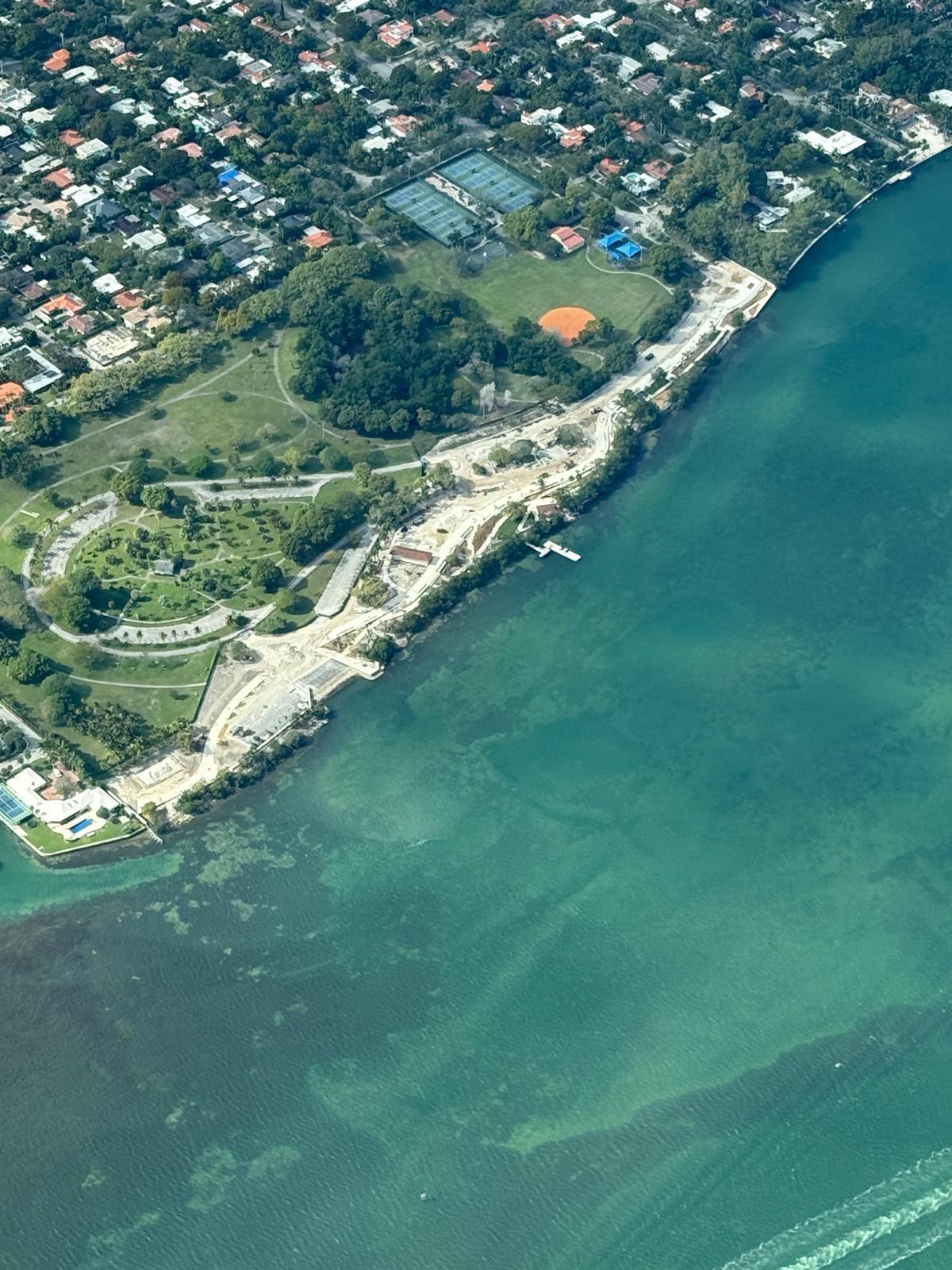
Hydrology and Climate Science at Odds with Design
From a hydrological perspective, the Morningside Park redesign represents a significant step backward for Miami’s stormwater management capacity. Permeable surfaces allow rainwater to infiltrate into the ground, recharging aquifers, supporting vegetation, and reducing the volume and velocity of runoff entering storm drains and waterways.
Impervious concrete surfaces eliminate this natural filtration process, sending pollutants and excess water directly into Biscayne Bay. In a city where sunny-day flooding from king tides already disrupts neighborhoods, reducing the landscape’s capacity to absorb water intensifies flooding risks.
Climate projections indicate Miami will face more frequent and severe precipitation events, making water-absorbing green infrastructure increasingly critical for urban resilience. The concrete walkway also eliminates root systems that stabilize soil, provide shade that reduces surface temperatures, and support biodiversity.
Public Parks and the Public Interest
The controversy raises fundamental questions about who public parks serve and how planning decisions are made. Johnson’s post concludes with a pointed reminder: “Public parks belong to the public, not to unchecked planning experiments.”
Residents are demanding transparency about the decision-making process that led to the Morningside Park redesign, including who advocated for the concrete walkway, what environmental review was conducted, and whether alternatives were considered.
User _isabellerose asked: “How do we take action here? Or when?” (1 like)—reflecting a desire among residents to move beyond social media outrage to concrete civic engagement.
The viral Instagram post and overwhelming public response suggest that Miami residents are increasingly unwilling to accept climate-washing rhetoric that contradicts observable reality. When officials promote resilience initiatives while approving projects that undermine natural climate adaptation capacity, public trust erodes and demands for accountability intensify.
A Test Case for Miami’s Climate Future
The Morningside Park controversy may serve as a test case for Miami’s approach to balancing development pressures with environmental imperatives. If public outcry leads to project modifications, independent audits, or restoration efforts, it could signal a shift toward more ecologically informed planning.
For now, the before-and-after images circulating on social media stand as a stark visual representation of competing visions for Miami’s future—one prioritizing permeable green infrastructure that works with natural systems, the other favoring hardscape development that accelerates water problems.
User devondulaney summarized the sentiment bluntly: “What an ugly peice of shit” (2 likes). The assessment reflects not just aesthetic judgment but frustration that Miami continues to sacrifice functional green space for concrete solutions that exacerbate the very climate challenges the city claims to be addressing.
User nico5180 appealed directly to state leadership: “Crazy the amount of things that are happening in Florida all at the same time. @flgovrondesantis we want to be know as the State that saves, protects and keep scared NATURE. I’m mean he live in summer all year round” (1 like).
National Context: The Green Infrastructure Movement
Miami’s Morningside Park controversy unfolds against a national backdrop of cities increasingly embracing green infrastructure as a climate adaptation strategy. Philadelphia’s Green City, Clean Waters program has invested billions in replacing impervious surfaces with rain gardens, bioswales, and permeable pavement. New York City’s Green Infrastructure Plan prioritizes nature-based solutions over traditional gray infrastructure for stormwater management.
These cities have recognized what Miami residents are now demanding: that green infrastructure provides superior climate resilience compared to conventional concrete approaches. Studies consistently demonstrate that vegetated landscapes reduce flooding, lower urban temperatures, improve air quality, sequester carbon, and provide recreational and mental health benefits—all while costing less to maintain than hardscape alternatives.
What Happens Next
The Morningside Park situation now enters a critical phase. Will Miami officials respond to public outcry with transparency, independent review, and willingness to course-correct? Or will the project proceed unchanged, reinforcing perceptions that resident concerns are subordinate to development interests?
The demands outlined in Jessica Johnson’s viral Instagram post provide a clear roadmap: halt further concrete construction, conduct an independent environmental audit, remove officials who prioritize hardscape over ecology from future park decisions, and develop a restoration plan to return Morningside Park to functional green infrastructure.
Whether these demands are met will signal whether Miami’s climate resilience rhetoric is backed by genuine commitment or merely serves as political cover for business-as-usual development. The eyes of environmental advocates, concerned residents, and national observers are now on Miami’s response.
For a city that markets itself as a leader in climate adaptation and resilience planning, the Morningside Park controversy presents both a challenge and an opportunity. The challenge is acknowledging that a significant planning decision contradicted stated environmental goals. The opportunity is demonstrating that public input matters, that mistakes can be corrected, and that Miami is genuinely committed to nature-based climate solutions rather than concrete-based climate-washing.
The before-and-after images will remain as documentation of what was lost. The question now is whether Miami will choose to restore what was sacrificed or double down on the concrete cartel approach that residents are increasingly rejecting. The answer will define Miami’s climate credibility for years to come.