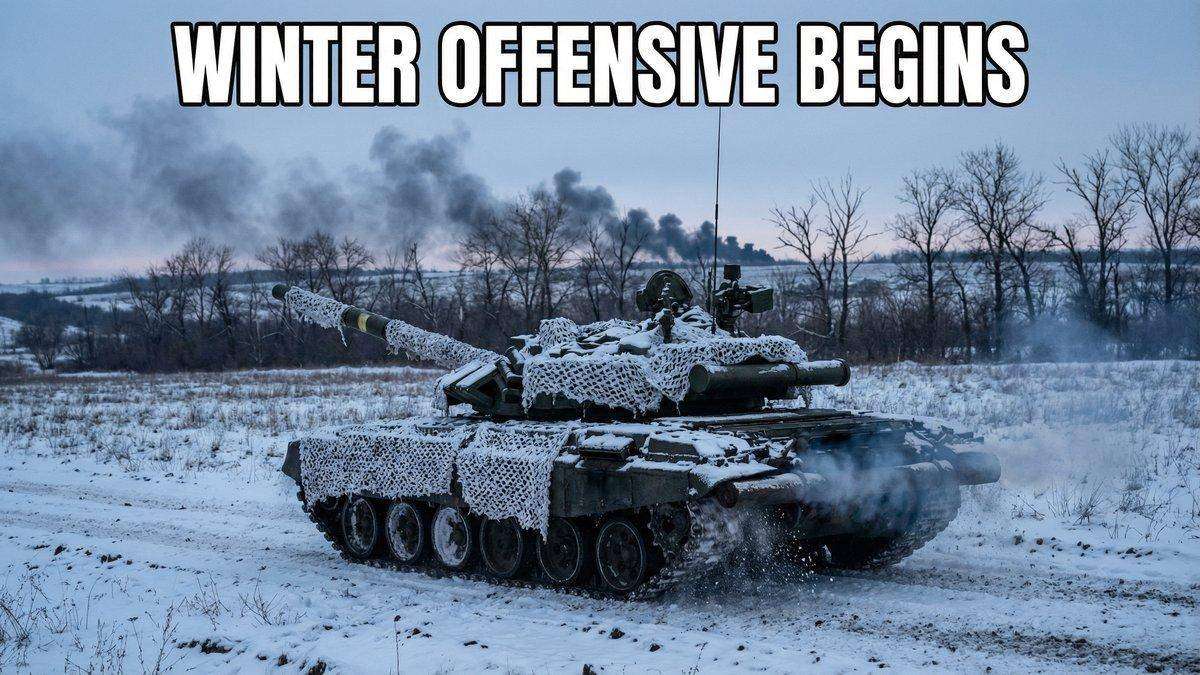
Ukraine Winter Operations 2026 have entered a critical phase as Russian forces continue their offensive campaign in the Donbas region. As the new year begins, both sides are locked in intense combat across multiple sectors, with the heaviest fighting concentrated around Pokrovsk and the broader Donetsk Oblast.
The Strategic Situation
According to the Institute for the Study of War, Russian forces have seized approximately 4,831 square kilometers of Ukrainian territory in recent months, with their primary objective being the capture of the entirety of Donetsk Oblast. The Russian military is simultaneously pushing Ukrainian forces back from the international border with Belgorod Oblast while attempting to approach within tube artillery range of Kharkiv City.
Ukrainian military intelligence chief General Kyrylo Budanov warned that Russia’s aim for 2026 is to seize all of the Donetsk and Zaporizhzhia regions. This ambitious goal has led to intensified Russian assaults across the front line, with Ukrainian forces reporting 191 separate clashes with Russian forces in a single 24-hour period.
“The Russian strategy is clear: they want to blow up our power and heating infrastructure while simultaneously grinding forward in the Donbas. But we are punching back.”
The Pokrovsk Sector: A Focal Point
The Pokrovsk direction has emerged as one of the most contested areas of the front. Ukrainian defenders are repelling continuous Russian offensives, with artillery units destroying columns of assault vehicles. According to Ukrinform, active operations by Ukrainian units are ongoing in the Pokrovsk and Myrnohrad sectors, and the Defense Forces continue to control the northern part of Pokrovsk.
Russian forces have adopted what Ukrainian military analysts describe as “meat assaults” using buggies and light vehicles to rapidly advance under artillery cover. These tactics have resulted in heavy casualties on both sides, but have allowed Russian forces to make incremental gains in some areas.
Air Defense and Strategic Strikes
On New Year’s Day 2026, Russia launched over 200 attack drones at Ukraine in a massive bombing campaign. Most were shot down by Ukrainian air defenses, which have been bolstered by the recent arrival of two additional Patriot air defense systems. These systems are being deployed to protect Ukrainian cities and critical infrastructure from Russian missile and drone attacks.
“Ukraine received and deployed two more Patriot air defense systems to protect Ukrainian cities and critical infrastructure from Russian attacks.”
Ukraine has responded with its own strategic strikes, targeting Russian oil refineries and military depots. On New Year’s Eve, Ukrainian forces struck 10 targets, setting refineries and fuel depots ablaze. Ukrainian officials argue that these strikes are necessary to degrade Russia’s ability to sustain its offensive operations and to retaliate for Russian attacks on civilian infrastructure.
The Peace Talks Dilemma
As the fighting intensifies, the question of peace negotiations looms large. Russia, which occupies approximately 20% of Ukraine, is pushing for full control of the Donbas region as part of any peace deal. However, a recent poll shows that 74% of Ukrainians oppose a peace plan that would include Ukraine’s withdrawal from the eastern Donbas region and a cap on the army’s size.
Ukrainian President Volodymyr Zelenskyy has vowed that Ukraine will fight on if peace talks fail, stating that any settlement must respect Ukraine’s territorial integrity and sovereignty. The Ukrainian government has made clear that it will not accept a peace agreement that legitimizes Russian territorial gains.
“We will not cede our territory. We will not accept a peace that rewards aggression. Ukraine will fight on.”
The Human Cost
The winter operations are taking a severe toll on both military personnel and civilians. Ukrainian troops, many of whom have been fighting for nearly three years, express doubt about whether the war will end in 2026. The constant artillery barrages, drone strikes, and infantry assaults have created a grinding war of attrition that shows no signs of abating.
Civilians in the Donbas region continue to suffer from Russian attacks on power and heating infrastructure. With winter temperatures plunging below freezing, millions of Ukrainians are enduring blackouts and heating shortages. International aid organizations are working to provide emergency assistance, but the scale of the humanitarian crisis continues to grow.
Looking Ahead
As 2026 unfolds, the situation in Ukraine remains precarious. Russian forces are making slow but steady gains in some areas, while Ukrainian forces are holding firm in others and conducting effective counterstrikes. The arrival of additional Western military aid, including Patriot systems and other advanced weaponry, is helping Ukraine maintain its defensive capabilities.
However, the ultimate outcome of the conflict remains uncertain. Both sides are preparing for a long war, with Russia mobilizing additional forces and Ukraine continuing to receive international support. The winter operations of 2026 may prove to be a decisive period in determining the trajectory of the war.
For more analysis on international conflicts, see our previous coverage on geopolitical developments and modern military technology.