The Midnight Raid That Changed Everything
In the early hours of January 3, 2026, American special operations forces executed one of the most audacious military operations in recent US history, infiltrating the Venezuelan capital of Caracas and extracting President Nicolás Maduro and his wife from the presidential palace in a lightning strike that stunned the world. The successful overnight joint US military extraction operation marked an unprecedented direct intervention in Latin American affairs, fundamentally altering the geopolitical landscape of the Western Hemisphere and raising profound questions about sovereignty, democracy, and American power projection in the 21st century.
President Donald Trump announced Maduro’s capture in a televised address that combined triumphalism with strategic ambiguity about Venezuela’s future. “We have successfully removed a dictator who has brutalized his people, destroyed his country’s economy, and turned Venezuela into a narco-state,” Trump declared, framing the operation as a humanitarian intervention and counter-narcotics mission rather than traditional regime change. The president initially stated that the United States would “run Venezuela” until a safe transition could be arranged, a statement that triggered immediate international controversy and domestic debate about American imperial overreach.
Venezuelan President Nicolás Maduro has been captured and flown out of Venezuela after the US carried out a large scale strike, according to official Pentagon statements that provided few operational details but confirmed that Maduro was now in US custody facing drug trafficking and corruption charges that had been filed years earlier but never enforced while he remained in power. The operation reportedly involved multiple military branches, sophisticated intelligence gathering, and coordination with elements within Venezuela’s security forces who had grown disillusioned with Maduro’s increasingly authoritarian rule.
The intervention represents the culmination of years of escalating US pressure on the Maduro regime, including comprehensive economic sanctions, diplomatic isolation, recognition of opposition leader Juan Guaidó as Venezuela’s legitimate president, and covert support for anti-government forces. However, the decision to launch a direct military operation marked a dramatic escalation that previous administrations had considered but ultimately rejected as too risky and potentially counterproductive to broader US interests in Latin America.
The Delcy Rodriguez Interim Government
In the immediate aftermath of Maduro’s removal, the Trump administration faced a critical decision about who would govern Venezuela during the transition period. Rather than immediately installing opposition leader María Corina Machado, who had won significant popular support and international recognition, Trump instead backed Delcy Rodriguez—a former Maduro loyalist and high-ranking regime official—to serve as interim president. Venezuela’s military and police have pledged loyalty to interim President Delcy Rodriguez, providing her government with the institutional support necessary to maintain order and prevent the country from descending into chaos.
The choice of Rodriguez surprised many observers who had expected the Trump administration to support democratic opposition forces that had spent years fighting against Maduro’s authoritarian rule. However, administration officials reportedly calculated that Rodriguez, as a known quantity with established relationships within Venezuela’s power structures, offered the most reliable path to stability and could be more easily controlled than Machado, whose independent streak and genuine popular mandate might make her less amenable to American direction.
Rodriguez is a former vice president under Maduro and served as president of the Constituent National Assembly, positions that gave her deep connections within Venezuela’s military, intelligence services, and bureaucracy. Her willingness to cooperate with the US intervention—whether through prior negotiation or post-facto acceptance—provided the Trump administration with a Venezuelan face for what might otherwise appear to be a straightforward American occupation. Rodriguez’s government includes other former Maduro officials who have pledged to implement reforms, combat corruption, and prepare the country for eventual elections, though specific timelines remain vague.
However, the Rodriguez government has already shown signs of tension with its American patrons. In late January 2026, Rodriguez publicly stated that she has had “enough” of US orders, pushing back against what she characterized as excessive American interference in Venezuelan governance decisions. The friction suggests that even a hand-picked interim leader may resist the level of control Washington seeks to exercise, complicating the Trump administration’s vision of a smooth transition that serves American interests while maintaining a veneer of Venezuelan sovereignty.
The Opposition Dilemma and Democratic Concerns
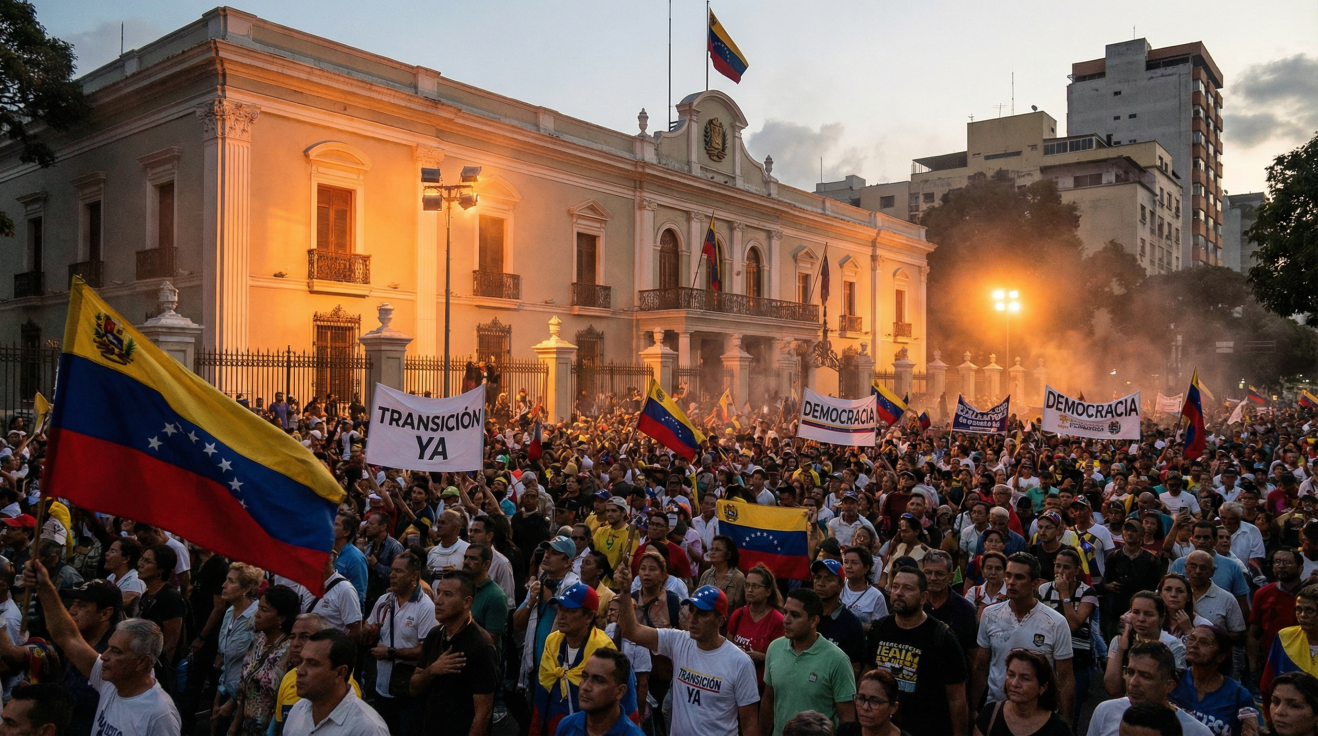
The Trump administration’s decision to sideline María Corina Machado and the broader democratic opposition has created significant friction with Venezuelan civil society and raised troubling questions about American commitment to democratic principles in Latin America. Friction emerges between Trump and Venezuelan opposition over Machado’s return, with advocates for the opposition leader expressing frustration that the US intervention has not resulted in her installation as president despite her legitimate claim to represent the Venezuelan people’s democratic aspirations.
Machado led a movement that mobilized millions of Venezuelans against Maduro’s authoritarian rule, enduring government persecution, exile, and constant threats while maintaining her commitment to peaceful democratic transition. Her exclusion from power in the post-Maduro era has been interpreted by many observers as evidence that the Trump administration prioritizes stability and control over genuine democracy, preferring to work with pliable former regime officials rather than independent democratic leaders who might pursue policies contrary to American interests.
The administration’s approach reflects a longstanding tension in US foreign policy between stated support for democracy and practical preferences for reliable partners who will advance American strategic and economic objectives. Trump officials have suggested that Machado may eventually have an opportunity to compete in elections once stability is restored, but have provided no concrete commitments about timing or conditions. Meanwhile, Rodriguez’s interim government has made vague promises about eventual democratic transitions while consolidating its control over state institutions and security forces.
Venezuelan opposition activists and international human rights organizations have expressed concern that the current trajectory could result in a new authoritarian government that differs from Maduro’s primarily in its willingness to accommodate American interests rather than in its commitment to democratic governance. The fear is that Venezuela could become a client state where elections are carefully managed to produce acceptable outcomes, dissent is tolerated only within narrow bounds, and genuine popular sovereignty remains elusive despite the removal of the Maduro regime.
Some analysts suggest the Trump administration may prefer “reliability over democracy in Caracas,” calculating that a stable authoritarian government friendly to American interests serves US objectives better than a genuinely democratic system that might elect leaders opposed to Washington’s agenda. This approach, if confirmed by subsequent developments, would represent a significant departure from the democracy promotion rhetoric that has characterized US policy toward Latin America for decades, even if actual practice has often fallen short of stated ideals.
Strategic Objectives: Oil, Drugs, and Geopolitics
The Trump administration has framed the Venezuela intervention as serving multiple strategic objectives that extend far beyond simple regime change. The 2025-2026 operations are seen by the Trump administration as serving the triple goals of crippling Maduro, disrupting drug trade routes, and getting oil, according to analysis from the Center for Strategic and International Studies and other policy research organizations examining the intervention’s underlying motivations.
Venezuela possesses the world’s largest proven oil reserves, a fact that has long attracted American attention and shaped US policy toward the country. Years of mismanagement, corruption, and sanctions under Maduro had reduced Venezuelan oil production to a fraction of its potential, creating an opportunity for American energy companies to potentially revitalize the industry under a friendly government. Trump has made clear that US oil companies will play a central role in Venezuela’s economic recovery, suggesting that access to Venezuelan petroleum resources represents a significant return on the investment of military intervention.
The counter-narcotics dimension of the intervention has been equally prominent in administration messaging. Venezuela under Maduro had become a major transit point for cocaine produced in Colombia and destined for US markets, with regime officials allegedly complicit in or directly profiting from the drug trade. Trump claimed in a Fox News interview that “we’ve knocked out 97% of the drugs coming in by water,” attributing this success to the Venezuela operation and suggesting that disrupting cartel operations represented a primary motivation for the intervention.
However, skeptics note that drug trafficking routes are highly adaptive, and that removing Maduro without addressing the underlying economic conditions that make Venezuela attractive to traffickers may simply displace rather than eliminate the problem. Moreover, the focus on counter-narcotics has been criticized as providing a politically palatable justification for an intervention primarily motivated by other considerations, including oil access and geopolitical competition with China and Russia, both of which had developed close relationships with the Maduro regime.
The geopolitical dimension of the intervention cannot be overlooked. Venezuela under Maduro had become a key node in Chinese and Russian efforts to challenge American influence in Latin America, hosting military advisors, receiving economic assistance, and providing diplomatic support for Beijing and Moscow’s global initiatives. By removing Maduro and installing a pro-American government, the Trump administration has dealt a significant blow to Chinese and Russian presence in the Western Hemisphere while reasserting US dominance in what Washington has long considered its sphere of influence.
Humanitarian Crisis and Economic Collapse
The intervention occurs against a backdrop of catastrophic humanitarian and economic conditions that have driven millions of Venezuelans to flee their country in one of the largest refugee crises in modern Latin American history. Venezuela has endured years of economic collapse, political instability, hyperinflation and economic sanctions from Washington, compounded by floods, landslides and other natural disasters, according to United Nations assessments that paint a grim picture of the country’s deteriorating conditions under Maduro’s rule.
Hyperinflation rendered the Venezuelan bolivar virtually worthless, with prices doubling every few weeks at the crisis’s peak and forcing citizens to carry bags of cash for simple purchases or abandon the national currency entirely in favor of US dollars. Food and medicine shortages became endemic as the economy contracted by more than 75% over a decade, with hospitals lacking basic supplies and supermarket shelves sitting empty while government-connected elites continued to live in luxury through corruption and black market operations.
The humanitarian crisis was exacerbated by Maduro’s authoritarian response to dissent, with security forces violently suppressing protests, political opponents imprisoned or exiled, and civil society organizations harassed and shut down. International human rights organizations documented widespread abuses including extrajudicial killings, torture, and forced disappearances as the regime sought to maintain control despite growing popular opposition and economic desperation.
More than 7 million Venezuelans—roughly one-quarter of the country’s population—have fled abroad since the crisis began, creating massive refugee flows into neighboring Colombia, Brazil, Peru, and other Latin American nations that have struggled to accommodate the influx. The refugee crisis has created regional tensions and placed enormous strain on host countries’ social services, education systems, and labor markets, making Venezuela’s instability a problem that extends far beyond its borders.
The UN and international aid organizations have maintained relief operations in Venezuela despite the political upheaval, providing food assistance, medical care, and support for vulnerable populations. However, the scale of need far exceeds available resources, and the political uncertainty following Maduro’s removal has complicated aid delivery and planning. The Rodriguez interim government has pledged to cooperate with international humanitarian efforts while seeking to restore economic functionality and address the root causes of the crisis.
International Reactions and Legal Questions
The US military intervention in Venezuela has generated sharply divided international reactions, with some nations supporting the removal of an authoritarian leader while others condemn what they view as a flagrant violation of Venezuelan sovereignty and international law. The operation has reignited debates about the legitimacy of humanitarian intervention, the role of international institutions in constraining great power behavior, and the extent to which the United States can or should act unilaterally to reshape the political order in other nations.
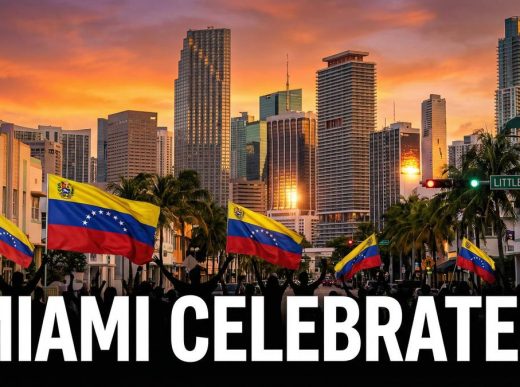
Latin American governments have been particularly divided in their responses. Colombia, which has borne the brunt of Venezuelan refugee flows and has long opposed Maduro, offered cautious support for the intervention while emphasizing the need for a rapid transition to democratic governance. Brazil, Argentina, and Chile have expressed concerns about the precedent set by direct military action while acknowledging the humanitarian crisis that preceded it. Mexico and several Central American nations have condemned the intervention as imperialism and called for respect for Venezuelan sovereignty regardless of the Maduro regime’s failings.
European nations have generally adopted a wait-and-see approach, neither endorsing nor condemning the intervention but emphasizing the importance of democratic transitions and respect for human rights in whatever government emerges. The European Union had previously recognized Juan Guaidó as Venezuela’s legitimate president, lending some credibility to arguments that Maduro’s government lacked legitimacy, but the installation of Rodriguez rather than democratic opposition leaders has complicated European support for the post-intervention order.
Russia and China have issued strong condemnations of the US action, characterizing it as illegal aggression and warning that it sets a dangerous precedent for great power interventions in the internal affairs of sovereign nations. Both countries had significant economic and strategic investments in Venezuela under Maduro and view his removal as part of a broader American campaign to roll back their influence in Latin America and other regions. However, neither nation has indicated willingness to take concrete action to reverse the intervention, suggesting that their opposition remains primarily rhetorical.
The legal basis for the intervention remains contested and ambiguous. The Trump administration has cited Maduro’s indictment on drug trafficking charges as providing legal authority for his capture, essentially treating the operation as an international law enforcement action rather than military regime change. However, international law experts note that such justifications are highly dubious, as they would essentially allow any nation to militarily intervene in any other nation where wanted individuals reside—a principle that would undermine the entire concept of sovereignty if universally applied.
The Uncertain Path Forward
As Venezuela enters its third week under the Rodriguez interim government, the country’s future remains deeply uncertain. The question of whether there is a chance for a transition to democracy remains open, with competing visions of Venezuela’s future being advanced by various domestic and international actors with differing interests and priorities.
The Rodriguez government has released some political prisoners in what it characterizes as a “peace gesture,” suggesting a willingness to pursue reconciliation with at least some elements of the opposition. However, the government has also moved to consolidate control over key institutions, replace military commanders whose loyalty is questionable, and establish new patronage networks that could perpetuate authoritarian governance under a different label.
The Trump administration faces its own challenges in managing the post-intervention transition. Having committed American prestige and resources to the operation, Washington cannot afford for Venezuela to descend into chaos or for a government hostile to US interests to eventually emerge. Yet the administration’s preference for working with former Maduro officials rather than democratic opposition forces has created tensions that could undermine long-term stability and legitimacy.
Economic reconstruction represents perhaps the most daunting challenge facing Venezuela. Restoring oil production will require massive investment in infrastructure that has deteriorated badly under years of mismanagement and sanctions. Addressing hyperinflation, rebuilding social services, and creating economic opportunities for ordinary Venezuelans will take years of sustained effort and international cooperation. The question of who will pay for this reconstruction—American taxpayers, international financial institutions, or Venezuelan oil revenues—remains unresolved and politically contentious.
The refugee crisis will not be quickly reversed even if conditions improve. Many Venezuelans who fled have established new lives abroad and may be reluctant to return to an uncertain future. Those who do return will need housing, employment, and social services that the country currently cannot provide. Managing the logistics of potential return migration while avoiding the creation of new grievances and instabilities will require careful planning and significant resources.
The Trump administration’s Venezuela intervention represents a bold gamble that the benefits of removing Maduro will outweigh the costs and risks of direct military action. Whether that gamble succeeds will depend on developments in the coming months and years as Venezuela attempts to rebuild from the ruins of economic collapse and political repression. For now, the country exists in a state of uncertain transition, with its ultimate destination—democracy, stability, prosperity, or continued dysfunction—yet to be determined by the complex interplay of Venezuelan aspirations and American interests.