The United States confronts a moment of profound transformation as artificial intelligence reshapes the economy, political dysfunction threatens government operations, climate disasters demand massive recovery efforts, and financial markets navigate unprecedented volatility. The convergence of technological revolution, institutional crisis, and environmental challenges is testing American resilience and revealing deep fissures in the nation’s political and social fabric.
Government Shutdown Crisis
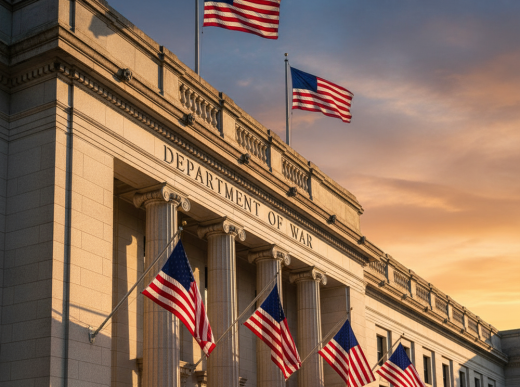
As the January 30 midnight deadline approaches, the United States faces a partial government shutdown after the Senate failed to pass crucial funding legislation on Thursday, January 29. The stalled package includes critical appropriations for the Department of Homeland Security and other federal agencies, raising concerns about national security operations, border protection, and essential government services.
Senate Democrats rejected a key procedural vote to express frustration over policy riders and funding levels, creating a standoff that has paralyzed normal legislative operations and highlighted the deep partisan divisions plaguing Congress. The vote failure represents the second time in as many weeks that lawmakers have struggled to fulfill their basic constitutional duty of funding government operations.
The immediate impacts of a shutdown would affect hundreds of thousands of federal workers who would either be furloughed or required to work without pay. Essential services including air traffic control, border security, and law enforcement would continue, but with degraded capacity and growing strain on personnel. Federal contractors, grant recipients, and communities dependent on federal services would face cascading disruptions.
Beyond the immediate operational impacts, the recurring pattern of shutdown threats and last-minute funding deals damages America’s fiscal credibility and governance reputation. Credit rating agencies have warned that such dysfunction could eventually affect the nation’s sovereign debt rating, with profound implications for borrowing costs and economic stability.
The funding crisis reflects deeper institutional challenges including narrow congressional majorities, intense partisan polarization, and the breakdown of traditional legislative processes that once facilitated compromise. Even with President Trump personally involved in negotiations, congressional Republicans have demonstrated greater independence than in his first term, complicating efforts to broker deals and advance administration priorities.
AI Revolution Drives Economic Transformation
Artificial intelligence has emerged as the dominant force reshaping the American economy, with investment firm Blackstone declaring that AI development represents the single biggest driver of economic growth in the United States. This assessment reflects the unprecedented scale of capital deployment into AI technologies and infrastructure, with implications extending across virtually every sector.
Major technology companies are committing staggering resources to AI development, with Meta Platforms alone planning to spend $135 billion on AI in 2026, while OpenAI pursues fundraising of up to $100 billion that would value the company at unprecedented levels. These investments dwarf spending in other technology categories and signal that corporate leaders view AI as an existential imperative rather than merely another product opportunity.
The federal government is also positioning itself at the center of AI development, with the Commerce Department planning to establish a national AI center in San Francisco. The facility will serve as a hub for federal AI research, policy development, and industry coordination, acknowledging Silicon Valley’s unmatched concentration of AI talent and innovation.
However, the AI boom is accompanied by significant workforce disruption, with major tech companies including Google, Pinterest, and Meta eliminating thousands of jobs even as they aggressively hire AI specialists. This bifurcation creates a labor market where AI expertise commands premium compensation while workers in other roles face job insecurity and limited opportunities.
The broader economic implications of AI-driven transformation raise fundamental questions about the future of work, the distribution of economic benefits, and the social contracts that have sustained middle-class prosperity. As AI capabilities expand to encompass tasks previously requiring human intelligence, policymakers and business leaders grapple with how to manage the transition in ways that create broadly shared prosperity rather than exacerbating inequality.
Wildfire Recovery and Federal Intervention
One year after devastating wildfires destroyed tens of thousands of homes across Los Angeles County, the recovery process has stalled amid insurance industry failures, construction cost inflation, and bureaucratic obstacles. The crisis has prompted President Trump to sign an executive order asserting federal control over reconstruction efforts, bypassing state and local authorities in a controversial assertion of federal power.
The executive order titled “Addressing State and Local Failures to Rebuild Los Angeles After Wildfire Disasters” authorizes federal agencies to fast-track building permits, override local zoning regulations, and assume control of reconstruction planning from California authorities. The order has sparked immediate legal challenges from Governor Gavin Newsom, who denounces it as unconstitutional federal overreach that violates basic principles of federalism and state sovereignty.
The insurance crisis affecting wildfire survivors reflects broader challenges facing the property insurance industry as climate change increases the frequency and severity of natural disasters. Major insurers have withdrawn from high-risk markets or dramatically reduced their exposure, leaving property owners with limited options and skyrocketing premiums that threaten to make homeownership unattainable for middle-class families in large swaths of the country.
A December 2025 survey found that nearly one-third of wildfire survivors cited construction costs and inadequate insurance payouts as primary obstacles preventing them from rebuilding their homes. The gap between insurance settlements based on pre-fire valuations and actual reconstruction costs can reach hundreds of thousands of dollars, creating financial impossibility for many families.
The federal-state conflict over wildfire reconstruction authority reflects deeper tensions about California’s relationship with Washington and the appropriate balance of power between federal and state governments. These tensions extend beyond disaster response to encompass water policy, immigration enforcement, environmental regulation, and numerous other areas where state and federal priorities diverge.
Financial Market Volatility
American financial markets are experiencing heightened volatility as investors navigate uncertainty surrounding Federal Reserve leadership, government shutdown threats, and massive corporate spending on artificial intelligence infrastructure. While major indices showed modest gains on Thursday, the VIX volatility index jumped 5.43%, signaling increased investor anxiety about near-term market direction.
The healthcare sector experienced a catastrophic selloff, with major health insurance companies suffering devastating losses that erased billions in market capitalization. Humana plunged 21.1%, UnitedHealth Group dropped 19.6%, Elevance Health fell 14.3%, and CVS Health posted significant declines. The sector-wide rout reflects growing investor concerns about regulatory pressures, Medicare Advantage reimbursement rates, and the sustainability of current business models.
Technology stocks showed resilience despite concerns about massive AI capital expenditures that are pressuring near-term profitability. Investors appear willing to accept current losses based on conviction that AI investments will eventually generate substantial returns, though questions remain about timing and the competitive dynamics that will determine which companies capture value.
The broader market environment reflects multiple crosscurrents including solid economic fundamentals, elevated interest rates, political uncertainty, and technological disruption. This combination creates challenging conditions for investors attempting to assess valuations and position portfolios for an uncertain future.
Cryptocurrency Regulation Advances
The Senate Agriculture Committee advanced a Republican-sponsored cryptocurrency bill on Thursday, marking substantial progress toward comprehensive federal regulation of the digital asset industry. The legislation represents years of work by industry advocates and lawmakers seeking to establish clear regulatory frameworks for digital currencies and blockchain technology.
The bill’s advancement suggests growing bipartisan recognition that cryptocurrency regulation can no longer be delayed or addressed through piecemeal enforcement actions. While specific provisions have not been fully disclosed, sources indicate the legislation addresses key issues including custody standards, consumer protections, and the division of regulatory authority between the Securities and Exchange Commission and the Commodity Futures Trading Commission.
The cryptocurrency industry has long complained that regulatory uncertainty in the United States has driven innovation and investment to more crypto-friendly jurisdictions overseas. Industry leaders argue that clear rules protecting consumers while allowing technological innovation would restore American competitiveness in this strategically important sector.
The appointment of SEC Commissioner Hester M. Peirce to lead the agency’s Crypto Task Force signals a shift from enforcement-heavy tactics toward constructive engagement and clear rulemaking. Peirce, known as “Crypto Mom” within the industry for her supportive stance toward digital assets, brings credibility and expertise to regulatory oversight efforts.
Extreme Weather Impacts
Extreme winter weather is affecting multiple regions across the United States, with New York City experiencing partial freezing of the Hudson River and requiring Coast Guard ice breaker deployments. The severe cold has caused hundreds of flight cancellations, disrupted ground transportation, and created life-threatening conditions for homeless populations in urban areas.
Climate scientists warn that extreme weather events—both winter storms and summer heat waves—will become more frequent and severe in coming decades, requiring substantial investments in infrastructure resilience and adaptation. The current winter storm highlights vulnerabilities in transportation systems, energy infrastructure, and social services that will face increasing stress as climate change progresses.
The contrast between extreme cold in some regions and ongoing wildfire threats in California illustrates the complex and varied impacts of climate change across different geographic areas. These divergent challenges require tailored adaptation strategies rather than one-size-fits-all approaches, complicating policy development and resource allocation.
Tech Industry Restructuring
The American technology industry is undergoing fundamental restructuring as companies reallocate resources toward artificial intelligence and away from other initiatives. This transformation involves widespread layoffs affecting tens of thousands of workers, even as companies aggressively recruit AI specialists at premium compensation levels.
Meta Platforms exemplifies this dynamic, planning to cut Reality Labs staff by 10% while spending $135 billion on AI development and infrastructure. The company is essentially abandoning its metaverse ambitions after years of massive investment, acknowledging that virtual reality has failed to capture consumer imagination despite billions in spending.
The workforce implications extend beyond the technology sector to encompass virtually every industry as AI capabilities expand. Workers across professions face pressure to acquire AI skills or risk displacement, while educational institutions struggle to develop curricula that remain relevant amid rapid technological change.
The geographic distribution of AI development remains heavily concentrated in coastal technology hubs, particularly the San Francisco Bay Area, despite efforts by other regions to attract companies and talent. This concentration raises concerns about regional inequality and the distribution of economic benefits from AI innovation.
Looking Ahead
The United States confronts a moment of profound uncertainty and transformation as multiple crises and opportunities converge. The artificial intelligence revolution promises economic growth and technological advancement but also threatens workforce disruption and increased inequality. Political dysfunction undermines governance capacity and fiscal credibility even as urgent challenges demand effective policy responses. Climate change drives increasingly severe disasters requiring massive adaptation investments and fundamental reconsideration of where and how Americans live.
The decisions made in coming months about AI development and deployment, climate adaptation, regulatory frameworks, and institutional reform will shape American society for generations. Whether the nation can navigate these challenges successfully while maintaining democratic institutions, social cohesion, and broadly shared prosperity remains an open question that will be answered through the actions of leaders and citizens alike.
For millions of Americans navigating daily life amid these macro trends, the immediate concerns remain more prosaic—maintaining employment, affording housing, accessing healthcare, and ensuring their children’s futures. The test of national leadership is whether the response to transformative challenges creates conditions for ordinary people to thrive, or whether the benefits of progress accrue narrowly while disruption and hardship are broadly distributed. The answer to that question will determine not just America’s economic trajectory but the sustainability of its democratic experiment.