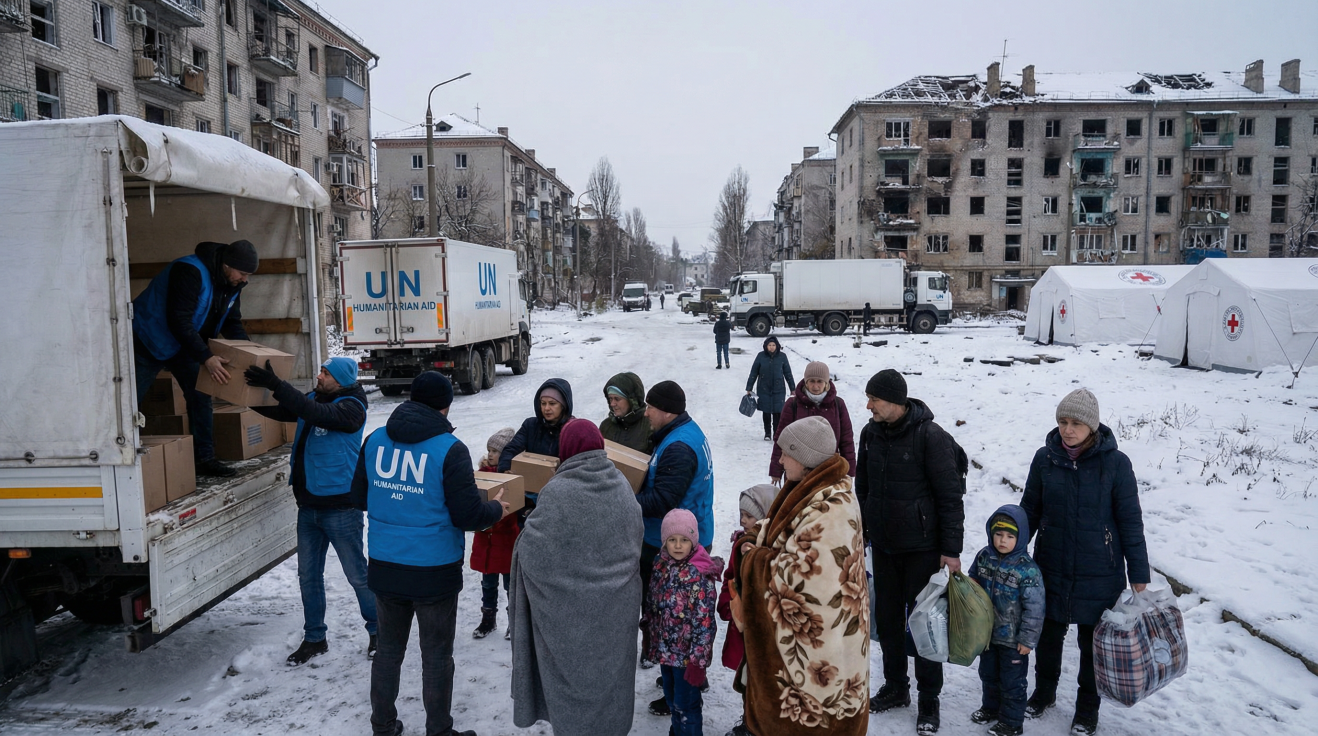
As the war in Ukraine enters its fourth year, the humanitarian catastrophe has evolved from an acute emergency into a protracted crisis that has displaced millions, killed tens of thousands of civilians, and created needs that will persist long after any eventual ceasefire. An estimated 10.8 million people inside Ukraine require humanitarian assistance in 2026, including 2.2 million children and 3.75 million internally displaced persons, while 5.75 million refugees remain scattered across Europe and beyond. The scale and duration of this crisis represent one of the largest humanitarian emergencies of the 21st century, testing the capacity and endurance of the international aid system while imposing devastating human costs that will shape Ukraine’s society for generations.
The Human Toll: Casualties and Displacement
The verified civilian death toll in Ukraine reached 13,900 by July 2025, with total civilian casualties exceeding 49,400 when injuries are included. These figures, compiled by the United Nations Human Rights Monitoring Mission, represent only documented cases where deaths could be verified through multiple sources; the actual toll is almost certainly higher, as casualties in areas under Russian occupation or active combat zones often go unrecorded. The year 2025 proved to be the deadliest for Ukrainian civilians since the initial 2022 invasion, with intensified Russian attacks on cities and systematic targeting of civilian infrastructure driving casualty rates upward.
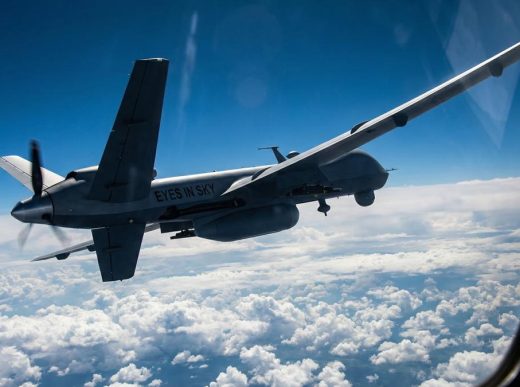
The use of short-range drones has emerged as a particularly lethal threat to civilians. UN monitors documented a 120 percent increase in drone-related civilian casualties in 2025, resulting in 577 civilians killed and 3,288 injured. These weapons allow Russian forces to strike with precision at civilian targets—homes, markets, public transportation—creating a climate of terror that extends far beyond front-line areas. The psychological impact of living under constant threat of drone strikes compounds the physical destruction, as civilians must weigh every decision to leave their homes against the risk of becoming a target.
Displacement has fractured Ukrainian society on a scale unprecedented in Europe since World War II. The 3.75 million internally displaced persons within Ukraine have fled their homes but remain in the country, often living in overcrowded conditions with host families, in collective centers, or in damaged buildings that provide minimal shelter. Many have been displaced multiple times as front lines shift and Russian offensives force new evacuations. The 5.75 million refugees who have left Ukraine—primarily for European countries—face their own challenges of integration, language barriers, and uncertainty about when or whether they can return home.
Systematic Infrastructure Destruction and Winter Warfare
Russia’s systematic campaign against Ukraine’s energy infrastructure represents a deliberate strategy to break civilian morale and force capitulation through suffering. Throughout 2025 and into 2026, Russian forces have conducted wave after wave of missile and drone strikes targeting power plants, electrical substations, heating facilities, and water treatment plants. The European Union, in announcing €153 million in humanitarian aid on January 29, 2026, explicitly noted that “daily civilian casualties, widespread infrastructure destruction, and mass displacement are further exacerbating the massive humanitarian needs.”
The timing of these infrastructure attacks is not coincidental. By concentrating strikes during winter months, Russian forces maximize the humanitarian impact, leaving hundreds of thousands of Ukrainians facing electricity outages, heating failures, and water shortages in sub-freezing temperatures. The Atlantic Council characterized this approach as Putin’s “surrender or freeze” strategy—a calculated effort to make civilian life so unbearable that Ukrainians will pressure their government to accept Russian terms for ending the war.
The cascading effects of infrastructure destruction extend far beyond immediate discomfort. Hospitals struggle to maintain power for critical medical equipment, water treatment facilities cannot operate without electricity, and the absence of heating in residential buildings forces families to choose between enduring dangerous cold or burning whatever materials they can find for warmth. Schools close, businesses shut down, and the basic functions of urban life become impossible to sustain. The UN has warned that this systematic cycle of attacks on energy infrastructure must end, noting that the humanitarian consequences amount to collective punishment of the civilian population.
Humanitarian Response and Funding Challenges
The international humanitarian response to the Ukraine crisis has mobilized billions of dollars in assistance, but the scale and duration of needs are straining the capacity of aid organizations and donor governments. The 2025-2026 Regional Refugee Response Plan, coordinated by UNHCR and partner agencies, provides targeted support to host countries accommodating Ukrainian refugees, recognizing that the burden of displacement extends beyond Ukraine’s borders to neighboring nations that have opened their doors to millions of people fleeing war.
Inside Ukraine, humanitarian organizations target 4.12 million people for assistance in 2026, with 3.58 million prioritized for the most urgent interventions. This represents a slight decrease from 2025 targets, not because needs have diminished but because aid organizations must make difficult triage decisions about which populations can be reached and which interventions will have the greatest impact with limited resources. The gap between assessed needs and available funding means that many Ukrainians in desperate circumstances receive inadequate assistance or none at all.
UNICEF’s 2026 Humanitarian Action for Children appeal for Ukraine highlights the particular vulnerability of children in the crisis. An estimated 2.2 million children require humanitarian assistance, facing risks that include physical danger from attacks, psychological trauma from exposure to violence, disrupted education, and separation from family members. The long-term consequences of childhood exposure to war—including developmental delays, mental health challenges, and lost educational opportunities—will affect Ukrainian society for decades, even after peace is eventually restored.
The European Commission’s statement accompanying its January 2026 humanitarian aid announcement captured the grim reality: “Today nearly one in three people in Ukraine needs urgent humanitarian help.” This statistic reflects not only the direct impacts of military operations but also the cumulative effects of years of conflict that have degraded infrastructure, disrupted livelihoods, depleted savings, and exhausted the coping mechanisms that allowed people to endure the initial phases of the war.
The Refugee Crisis and European Solidarity
The 5.75 million Ukrainian refugees recorded globally by September 2025 represent the largest refugee flow in Europe since the aftermath of World War II. The vast majority—5.2 million—have sought refuge in European countries, with Poland, Germany, and the Czech Republic hosting the largest numbers. The initial wave of European solidarity that greeted Ukrainian refugees in 2022 has been tested by the prolonged nature of the crisis, as host countries grapple with the costs of providing housing, education, healthcare, and social services to millions of displaced people.
Unlike some refugee situations where displaced populations are confined to camps, most Ukrainian refugees in Europe live in communities, enrolled in schools, and in some cases employed in local labor markets. This integration creates both opportunities and challenges. On one hand, it allows refugees to maintain dignity and contribute economically rather than remaining dependent on aid. On the other hand, it creates competition for housing and services in communities already facing their own economic pressures, potentially fueling political backlash against refugee policies.
The question of return looms over the refugee situation. Many Ukrainians abroad express a desire to return home once security conditions permit, but the destruction of housing, lack of economic opportunities, and ongoing insecurity make return impractical for the foreseeable future. Some refugees, particularly those who have established lives in host countries, may choose not to return even after the war ends, representing a permanent demographic loss for Ukraine that will affect the country’s post-war recovery capacity.
Health System Collapse and Medical Humanitarian Needs
Ukraine’s health system, already under strain before the war, has been pushed to the breaking point by systematic attacks on medical facilities, displacement of healthcare workers, and the overwhelming burden of treating war-related injuries alongside routine medical needs. Hospitals in front-line areas operate in basements to protect patients and staff from shelling, often without reliable electricity or adequate supplies. Medical personnel work under conditions of extreme stress, treating traumatic injuries with limited resources while facing personal risks from attacks.
The targeting of healthcare facilities violates international humanitarian law but has become a recurring feature of the conflict. The World Health Organization has documented hundreds of attacks on health facilities in Ukraine since the war began, with consequences that extend far beyond the immediate victims. When hospitals are destroyed or forced to close, entire communities lose access to essential medical services, creating secondary health crises as people with chronic conditions cannot obtain treatment and preventable diseases go untreated.
Mental health needs represent a growing dimension of the humanitarian crisis that receives insufficient attention and resources. The entire Ukrainian population has been exposed to traumatic stress, whether through direct experience of combat, displacement, loss of loved ones, or the constant anxiety of living under threat. Children are particularly vulnerable to long-term psychological consequences, with studies documenting high rates of post-traumatic stress disorder, anxiety, and depression among young people affected by the war. The capacity of Ukraine’s mental health system to address these needs is woefully inadequate, leaving millions without access to psychological support.
Food Security and Agricultural Disruption
Ukraine’s role as a major global grain exporter has made agricultural disruption a dimension of the humanitarian crisis with international implications. While the Black Sea Grain Initiative temporarily allowed Ukrainian grain exports to resume, the collapse of that agreement and ongoing attacks on port facilities have disrupted food production and export capacity. Inside Ukraine, agricultural communities in conflict-affected areas face landmine contamination of fields, destruction of farm equipment, and displacement of rural populations, all of which reduce food production.
The food security implications extend beyond Ukraine’s borders. Ukrainian grain exports feed populations across Africa and the Middle East, and disruptions to these flows contribute to global food price increases that hit the world’s poorest people hardest. The weaponization of food—whether through deliberate targeting of agricultural infrastructure or blockades of export routes—represents a humanitarian concern that transcends national boundaries and affects global stability.
Within Ukraine, food insecurity affects millions of people who have lost livelihoods, exhausted savings, and face rising prices for basic necessities. Humanitarian food assistance provides a lifeline for the most vulnerable, but the scale of need exceeds the capacity of aid organizations to respond comprehensively. Elderly people living alone, female-headed households, and people with disabilities face particular risks of food insecurity, as they have limited ability to adapt to disrupted markets and reduced incomes.
Education in Crisis and Lost Futures
The disruption of education represents a humanitarian crisis whose full impact will only become apparent in future years. Schools have been destroyed, teachers displaced, and children’s learning interrupted by displacement, attacks, and the psychological trauma of war. While some education continues through distance learning and makeshift arrangements, the quality and accessibility of instruction have declined dramatically, particularly for children in conflict-affected areas or living in displacement.
The long-term consequences of educational disruption are profound. Children who miss years of schooling face reduced lifetime earning potential, limited career opportunities, and gaps in knowledge that are difficult to remediate later. The social and developmental benefits of school—including peer interaction, structured routine, and exposure to positive role models—are lost when education systems collapse. For Ukraine’s future, the educational crisis represents a threat to human capital development that will affect the country’s recovery and competitiveness for decades.
Teachers and education workers themselves are among the war’s victims, with many displaced, killed, or forced to work under impossible conditions. The dedication of educators who continue teaching in bomb shelters, through online platforms with unreliable internet, or in overcrowded facilities with displaced students deserves recognition, but individual heroism cannot substitute for the systematic support that education systems require to function effectively.
The Long Shadow: Generational Trauma and Social Cohesion
Beyond the immediate humanitarian needs of food, shelter, and medical care lies the less visible but equally profound crisis of trauma and social fragmentation. An entire generation of Ukrainians is growing up with war as their formative experience, shaping worldviews, relationships, and expectations in ways that will influence Ukrainian society long after the last shot is fired. The normalization of violence, the disruption of family structures, and the loss of community ties create social challenges that humanitarian interventions struggle to address.
The displacement of millions of people has fractured social networks and community bonds that took generations to build. Villages that once had stable populations now stand empty or house unfamiliar displaced persons. Cities absorb waves of internally displaced people who strain local resources and create tensions with longer-term residents. The social fabric that holds communities together frays under the pressure of prolonged crisis, with consequences for trust, cooperation, and collective action that will persist long after the war ends.
The challenge of maintaining social cohesion extends to the relationship between Ukrainians who remained in the country and those who fled abroad. Resentments can develop on both sides—those who stayed may view refugees as having abandoned the country in its hour of need, while refugees may feel that those who remained do not understand the difficult circumstances that forced their departure. Bridging these divides and rebuilding national unity will be essential for Ukraine’s post-war recovery but will require sustained effort and resources.
International Response and the Test of Sustained Commitment
The international community’s response to Ukraine’s humanitarian crisis has been substantial by historical standards, with billions of dollars mobilized and millions of refugees welcomed into European countries. Yet the test of sustained commitment grows more difficult as the war drags on, other crises compete for attention and resources, and domestic political pressures in donor countries create resistance to continued support. The risk of “donor fatigue” is real, even as humanitarian needs in Ukraine remain acute and show no signs of diminishing.
The European Union’s continued commitment, exemplified by the €153 million humanitarian aid package announced in January 2026, demonstrates that major donors recognize the ongoing nature of the crisis. However, the gap between assessed needs and available funding continues to widen, forcing humanitarian organizations to make impossible choices about which populations to assist and which needs to prioritize. The 2026 humanitarian appeals for Ukraine total billions of dollars, and historical patterns suggest that these appeals will be only partially funded, leaving significant needs unmet.
The challenge for the international humanitarian system is to maintain focus and resources on Ukraine while also responding to crises in Gaza, Sudan, Afghanistan, and other contexts where millions of people face life-threatening needs. The principle of needs-based humanitarian assistance holds that aid should flow to the most vulnerable regardless of political considerations, but in practice, high-profile crises with strong geopolitical dimensions like Ukraine often receive disproportionate attention and funding compared to equally severe but less visible emergencies.
Conclusion: A Crisis Without End in Sight
The humanitarian catastrophe in Ukraine has evolved from an acute emergency into a protracted crisis that will define the lives of millions of people for years to come. The 10.8 million people requiring assistance, the 5.75 million refugees, the thousands of civilian casualties, and the systematic destruction of infrastructure represent not merely statistics but human suffering on a scale that challenges comprehension. Each number represents individuals—children separated from parents, elderly people enduring winter without heat, families living in damaged buildings, refugees uncertain if they will ever return home.
The long-term nature of the crisis demands a shift in international response from emergency relief to sustained support for resilience and recovery. This includes not only meeting immediate needs for food, shelter, and medical care but also investing in education, mental health services, livelihood support, and the rebuilding of social infrastructure. The challenge is to maintain humanitarian principles of impartiality and needs-based assistance while recognizing that the scale and duration of Ukraine’s crisis require resources and commitment that test the limits of the international system.
For Ukraine itself, the humanitarian crisis represents both an immediate tragedy and a long-term challenge to the country’s future. The displacement of millions, the trauma experienced by an entire generation, the destruction of infrastructure and productive capacity, and the loss of human capital through death and emigration will shape Ukraine’s trajectory for decades. The resilience and determination of the Ukrainian people have been remarkable, but resilience alone cannot overcome the systematic destruction and suffering that the war has inflicted.
The international community faces a choice: to sustain commitment to Ukraine’s humanitarian needs for as long as necessary, or to allow attention and resources to drift to other priorities while millions of Ukrainians continue to suffer. The moral imperative is clear, but translating moral clarity into sustained political will and adequate funding remains the central challenge of the humanitarian response. The people of Ukraine deserve better than to be forgotten while their crisis continues, and the international system’s credibility depends on demonstrating that humanitarian principles mean something even when emergencies become protracted and the path to resolution remains unclear.