Executive Order Declares Cuba National Security Threat
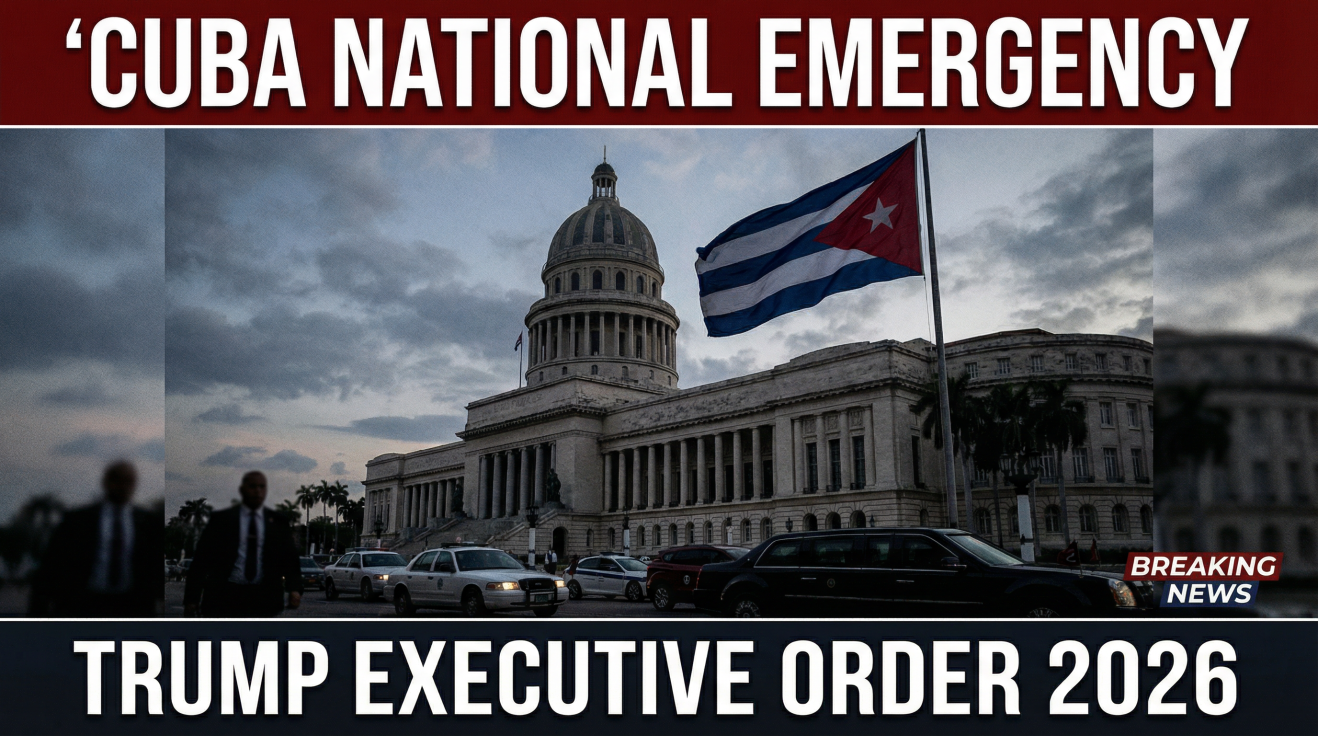
President Donald Trump signed an executive order on January 29, 2026, declaring Cuba a national security threat and invoking emergency powers to address what the administration characterizes as an “unusual and extraordinary threat” to U.S. national security and foreign policy. The declaration marks the Trump administration’s most aggressive policy escalation against Cuba since returning to office, establishing a legal framework for comprehensive economic pressure on the communist regime.
The executive order states that “the policies, practices, and actions of the Government of Cuba constitute an unusual and extraordinary threat” to the United States, citing Cuba’s relationships with Russia, China, Iran, Hamas, Hezbollah, and other entities Washington considers hostile. The declaration invokes the International Emergency Economic Powers Act (IEEPA) and the National Emergencies Act (NEA), granting the President broad authority to regulate international commerce and impose economic sanctions.
“I think Cuba will not be able to survive,” Trump stated when announcing the order, making clear his administration’s intent to force regime change through sustained economic pressure. The declaration follows decades of U.S.-Cuba hostility but represents a qualitative escalation by formally declaring the island a national emergency requiring extraordinary presidential powers.
Legal Justification and Emergency Powers
The executive order’s preamble outlines the administration’s case for declaring a national emergency, accusing the Cuban government of policies “designed to harm the United States and support hostile countries, transnational terrorist groups, and malign actors that seek to destroy the United States.” The declaration emphasizes that Cuba’s actions are “repugnant to the moral and political values of democratic and free societies” and conflict with U.S. foreign policy goals.
The invocation of IEEPA grants the President sweeping powers to regulate international commerce, freeze assets, and impose sanctions during declared national emergencies—powers that have been used against countries including Iran, North Korea, and Venezuela. By declaring Cuba a national emergency, the administration creates a legal foundation for escalating economic pressure beyond existing sanctions.
The order cites section 301 of title 3 of the United States Code as additional legal authority, providing the President with broad discretion to implement policies addressing the declared emergency. This legal framework allows the administration to impose new restrictions on Cuba without requiring congressional approval, though lawmakers retain oversight authority and can challenge emergency declarations.
Critics argue that declaring Cuba a national emergency stretches the legal definition of emergency powers, noting that Cuba has been under U.S. sanctions for over six decades without previously warranting emergency declarations. Legal scholars question whether Cuba’s current relationships with adversarial powers constitute a genuinely new threat or merely a continuation of long-standing geopolitical tensions.
Cuba’s Relationships with Adversarial Powers
The executive order specifically cites Cuba’s support for Russia, China, Iran, and terrorist organizations as justification for the national emergency declaration. Cuba has maintained close ties with Russia since the Soviet era, hosting Russian military and intelligence facilities on the island. These facilities provide Russia with signals intelligence capabilities in the Western Hemisphere and serve as a strategic counterweight to U.S. influence in the region.
China has significantly expanded its presence in Cuba over the past decade, investing in telecommunications infrastructure, port facilities, and economic development projects. Chinese technology companies have established operations in Cuba, raising U.S. concerns about surveillance capabilities and intelligence gathering near American shores. The Trump administration views Cuba as a potential platform for Chinese espionage and military activities in the Caribbean.
Cuba’s relationship with Iran has grown closer in recent years, with both countries facing severe U.S. sanctions and seeking to coordinate resistance to American economic pressure. The two nations have expanded diplomatic, economic, and technological cooperation, creating what U.S. officials describe as an “axis of resistance” to American interests.
The executive order’s emphasis on Cuba’s support for Hamas and Hezbollah reflects the administration’s broader strategy of linking Cuba to terrorism and regional instability, strengthening the legal and political case for aggressive economic measures. While Cuba’s direct support for these organizations has diminished since the Cold War, the administration argues that any relationship with designated terrorist groups justifies emergency powers.
Historical Context of U.S.-Cuba Relations
The national emergency declaration represents the latest chapter in over six decades of U.S.-Cuba hostility. The United States imposed a comprehensive embargo on Cuba in 1962, shortly after Fidel Castro’s revolution aligned the island with the Soviet Union. The embargo has remained largely intact despite periodic efforts at normalization, most notably during the Obama administration.
President Obama restored diplomatic relations with Cuba in 2015 and eased some travel and trade restrictions, arguing that decades of isolation had failed to achieve regime change and that engagement offered better prospects for promoting democratic reforms. The Trump administration reversed many of these policies during its first term, reimposing travel restrictions, limiting remittances, and designating Cuba a state sponsor of terrorism.
The current executive order goes further than previous Trump administration actions by formally declaring Cuba a national emergency, creating a legal framework for potentially unlimited economic pressure. This escalation reflects the administration’s assessment that previous sanctions have been insufficient and that more aggressive measures are necessary to force regime change.
Cuba has survived previous U.S. pressure campaigns, including the “Special Period” economic crisis following the Soviet Union’s collapse in 1991. The regime demonstrated remarkable resilience, implementing limited market reforms while maintaining political control. Whether Cuba can weather the current pressure campaign depends partly on external support and partly on the regime’s ability to manage domestic discontent.
Domestic Political Considerations
The executive order appeals to Trump’s political base, particularly Cuban-American voters in Florida who have historically supported hardline policies toward the Castro regime and its successors. Florida’s Cuban-American community has been a reliable Republican constituency, and aggressive Cuba policy reinforces Trump’s support among these voters ahead of future elections.
Secretary of State Marco Rubio, a Cuban-American senator from Florida before joining the Trump administration, has been a leading advocate for maximum pressure on Cuba. His influence on Cuba policy is evident in the executive order’s comprehensive approach to isolating the island economically and diplomatically.
The policy faces criticism from business groups that see Cuba as a potential market for U.S. exports and from agricultural interests that have historically supported easing the embargo to sell food products to Cuba. However, these economic interests carry less political weight than the Cuban-American community’s strong support for aggressive Cuba policy.
Cuba’s Current Crisis
The executive order targets Cuba at a moment of profound vulnerability. The island has experienced widespread blackouts, fuel rationing, and economic disruption as its aging infrastructure fails and external support dwindles. Venezuela, historically Cuba’s primary economic benefactor, has drastically reduced assistance as its own economy collapsed under mismanagement and sanctions.
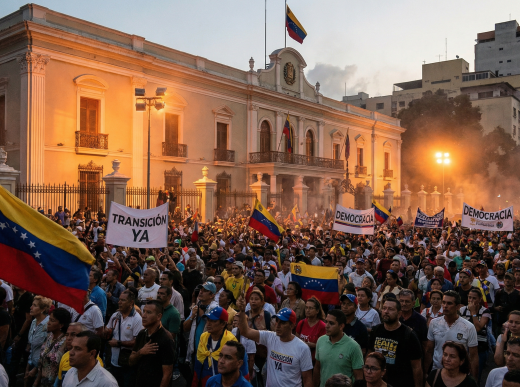
Cuba’s economic crisis has triggered social unrest, with protests erupting in multiple cities as residents endure severe shortages of food, medicine, and basic necessities. The communist government has struggled to maintain control, deploying security forces to suppress demonstrations while attempting to secure alternative sources of economic support from Russia, China, and other countries.
The Trump administration’s national emergency declaration aims to exploit this vulnerability by establishing a legal framework for cutting off Cuba’s remaining economic lifelines. If successful, the policy could leave Cuba without the external support necessary to maintain basic services, potentially triggering regime collapse or forcing Havana to negotiate with Washington on U.S. terms.
However, history suggests that authoritarian regimes can survive severe economic pressure by tightening internal controls and blaming external enemies for hardship. The Cuban government has decades of experience managing scarcity and maintaining political control despite economic crisis, making the outcome of the current pressure campaign uncertain.
International Reaction
The executive order has drawn criticism from countries that view U.S. Cuba policy as anachronistic and counterproductive. The United Nations General Assembly has voted annually for decades to condemn the U.S. embargo on Cuba, with only Israel consistently supporting the American position. The national emergency declaration is likely to intensify international opposition to U.S. Cuba policy.
European Union officials have expressed concern about the escalating U.S. approach to Cuba, arguing that engagement rather than isolation offers better prospects for promoting democratic reforms. The EU maintains normal diplomatic and economic relations with Cuba and has historically opposed unilateral U.S. sanctions that affect European companies and citizens.
Latin American countries, many of which maintain normal relations with Cuba, have criticized the executive order as interventionist and contrary to regional norms of non-interference. The Organization of American States (OAS), while critical of Cuba’s human rights record, has generally opposed unilateral sanctions and called for dialogue rather than economic coercion.
The international criticism reflects broader concerns about U.S. unilateralism and the use of economic power to pursue regime change objectives that lack multilateral support. The Trump administration has dismissed these concerns, arguing that Cuba’s relationships with adversarial powers justify aggressive U.S. action regardless of international opinion.
Geopolitical Implications
The national emergency declaration carries significant implications for broader U.S. foreign policy and geopolitical dynamics. By formally declaring Cuba a national security threat, the administration signals its intent to treat the island as a hostile power requiring comprehensive containment rather than a minor irritant to be managed through existing sanctions.
Russia and China may view the declaration as an opportunity to deepen their relationships with Cuba, positioning themselves as defenders of Cuban sovereignty against U.S. aggression. Both countries have strategic interests in maintaining a foothold in the Western Hemisphere, and increased U.S. pressure on Cuba could strengthen their resolve to provide economic and military support.
The declaration also tests the limits of presidential emergency powers and could set precedents for future administrations seeking to escalate economic pressure on adversarial countries. Legal scholars and civil liberties advocates worry that expansive interpretations of emergency authority could undermine congressional oversight and democratic accountability in foreign policy.
Implementation and Next Steps
The executive order establishes a framework for implementing specific economic measures targeting Cuba, with details to be determined through interagency processes involving the State Department, Commerce Department, Treasury Department, and other agencies. The declaration itself does not impose new sanctions but creates the legal authority for the administration to do so without additional congressional approval.
The administration is expected to announce specific measures in the coming weeks, potentially including expanded restrictions on remittances, tighter travel limitations, and new sanctions on Cuban entities and individuals. The national emergency declaration provides maximum flexibility for the administration to calibrate pressure based on Cuba’s responses and geopolitical considerations.
Congressional oversight will play a crucial role in determining how aggressively the administration implements the emergency powers. While the President has broad authority under IEEPA, Congress can challenge emergency declarations and impose limitations on executive actions through legislation and appropriations.
Long-term Strategic Questions
Beyond immediate implementation, the national emergency declaration raises fundamental questions about U.S. strategy toward Cuba. If maximum economic pressure fails to produce regime change, what is the next escalation? If it succeeds, what comes after the current government falls? The administration has not articulated a clear vision for post-regime change Cuba or how it would manage a potential transition.
The policy also tests whether economic coercion remains effective in an increasingly multipolar world where countries have alternatives to U.S.-dominated trade and financial systems. China’s Belt and Road Initiative and Russia’s efforts to create sanctions-resistant financial infrastructure provide potential lifelines for countries under U.S. pressure.
Ultimately, the national emergency declaration represents a bet that Cuba’s economic vulnerability and geographic proximity to the United States make it susceptible to pressure that might not work against larger, more economically diversified adversaries. Whether that bet pays off will become clear in the months ahead as the administration implements specific measures and Cuba responds to escalating economic warfare.