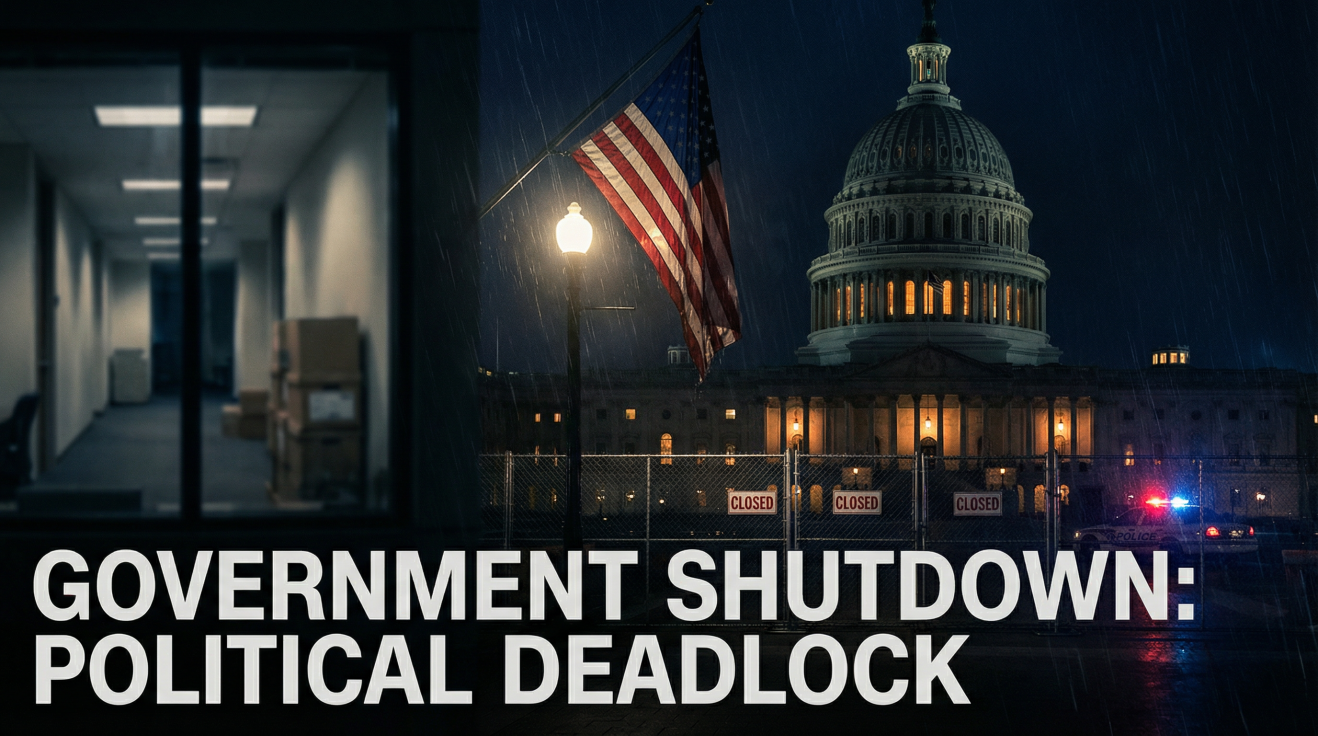
A partial shutdown of the federal government began at 12:01 AM ET on Saturday, January 31, 2026, despite the Senate’s passage of a funding deal late Friday evening. The shutdown, which affects dozens of federal agencies including the Department of Homeland Security, results from procedural timing rather than legislative failure—the House of Representatives is not scheduled to return to Washington until Monday, creating an unavoidable gap in appropriations authority even though the funding package is expected to pass once the House votes.
The Senate approved the compromise package by a vote of 71-29 on Friday evening, January 30, after a day of tense negotiations and last-minute objections from Republican senators. The deal includes five full-year appropriations bills that would fund most federal agencies through September 30, 2026, the end of the current fiscal year. However, the package notably strips out long-term funding for the Department of Homeland Security, instead providing only a two-week stopgap measure for that agency while lawmakers continue negotiations over controversial immigration enforcement issues.
The Immigration Enforcement Controversy
The unusual structure of the funding deal—full-year appropriations for most agencies but only a temporary extension for DHS—reflects intense Democratic anger over aggressive immigration enforcement actions in Minnesota. Incidents involving Immigration and Customs Enforcement operations sparked outrage among Democratic senators and prompted calls for restrictions on ICE activities and accountability measures for federal immigration agents.
Democrats had initially demanded that any DHS funding bill include specific limitations on immigration enforcement operations, particularly regarding the use of force and the circumstances under which raids could be conducted in sensitive locations such as schools, hospitals, and places of worship. These demands put Democrats on a collision course with the Trump administration, which has made aggressive immigration enforcement a centerpiece of its policy agenda and has resisted any constraints on ICE and Customs and Border Protection operations.
The standoff created a genuine risk of a prolonged government shutdown, as neither side appeared willing to compromise on core principles. The compromise that ultimately emerged—full funding for most agencies but only a short-term extension for DHS—represents a temporary solution that defers the underlying conflict rather than resolving it. Lawmakers will have two weeks to negotiate a longer-term DHS funding arrangement, but the fundamental disagreements about immigration enforcement policy remain unresolved.
Senate Drama: Graham’s Hold and Last-Minute Deal
The path to Friday evening’s Senate vote was complicated by objections from Senator Lindsey Graham of South Carolina, who placed a hold on the funding package and demanded concessions in exchange for allowing it to proceed. Graham’s hold threatened to delay the vote indefinitely, as Senate rules allow any individual senator to block consideration of legislation unless other senators are willing to go through time-consuming procedural steps to override the objection.
Graham’s demands centered on two issues unrelated to the immediate funding dispute. First, he wanted a guaranteed vote on his bill to criminalize so-called “sanctuary city” policies. This legislation would impose criminal penalties on state and local officials who “willfully interfere with the enforcement of federal immigration laws.”
Second, Graham sought an amendment related to investigations conducted by then-special counsel Jack Smith. Graham’s proposed amendment would have required federal officials to notify senators if their phone records were obtained during criminal investigations. This demand reflected Graham’s anger over revelations that his phone records, along with those of other senators, had been obtained during Smith’s investigation into efforts to overturn the 2020 presidential election results.
After hours of negotiations on Friday, Graham agreed to lift his hold in exchange for promises of amendment votes, though the specific terms of the agreement were not immediately made public. His decision to relent came after pressure from Republican leadership and reportedly after conversations with President Trump, who had endorsed the funding deal in a Truth Social post on Thursday.
What the Shutdown Means for Federal Operations
The partial government shutdown that began early Saturday morning affects six of the twelve fiscal year 2026 appropriations bills, which provide funding for a significant portion of federal government operations. The Department of Homeland Security is the most prominent affected agency, but the funding lapse also impacts other departments and agencies covered by the unfunded appropriations bills.
During a shutdown, federal agencies must cease all activities except those deemed essential for protecting life and property or those funded through sources other than annual appropriations. “Essential” employees—including law enforcement personnel, air traffic controllers, and certain healthcare workers—must continue reporting to work but will not receive paychecks until the shutdown ends and Congress appropriates back pay.
For the Department of Homeland Security specifically, the shutdown means that while frontline operational personnel such as ICE agents, Customs and Border Protection officers, TSA screeners, and Secret Service agents will continue working, many administrative and support functions will be suspended. This can create operational challenges even for essential activities.
Economic and Practical Impacts
Government shutdowns impose real costs on the economy and on individuals affected by the suspension of federal services. The Congressional Budget Office estimated that the October 2025 shutdown resulted in a loss of $11 billion in real GDP. A 2019 Senate report found that shutdowns cause lasting economic damage beyond the immediate period of suspended operations.
Federal contractors face particularly acute challenges during shutdowns. Unlike federal employees, who typically receive back pay once the government reopens, contractors generally cannot recover lost wages or project delays. Small businesses that rely on federal contracts may struggle to meet payroll and other obligations during even brief shutdowns.
The timing of this particular shutdown—over a weekend—means that the immediate practical impacts will be somewhat limited compared to a shutdown that begins on a weekday. Many federal offices are closed on weekends anyway, so the suspension of operations may not be immediately noticeable to most Americans.
House Expected to Pass Deal on Monday
House Speaker Mike Johnson indicated on a House GOP conference call Friday afternoon that he supports the Senate-passed funding deal and expects the House to approve it when members return to Washington on Monday. Johnson’s backing is crucial, as it signals that Republican leadership will not attempt to modify the Senate package or add provisions that could delay final passage.
President Trump’s Thursday endorsement of the deal via Truth Social provides political cover for Republicans who might otherwise be reluctant to support a compromise that does not include long-term DHS funding or address immigration enforcement concerns more directly.
The Senate’s 71-29 vote margin suggests broad bipartisan support for the compromise, which should translate into comfortable passage in the House as well. Once the House passes the funding package, it will be sent to President Trump for his signature, which would end the shutdown and provide funding certainty for most federal agencies through the end of the fiscal year.
The Recurring Shutdown Problem
This latest shutdown represents the second funding lapse in fiscal year 2026, following a brief shutdown that began on October 1, 2025, when the fiscal year started without full appropriations in place. The recurring nature of these funding crises reflects deeper dysfunction in the congressional appropriations process.
Under normal procedures, Congress is supposed to pass twelve separate appropriations bills before the start of each fiscal year on October 1. In practice, Congress has rarely met this deadline in recent decades, instead relying on continuing resolutions and omnibus packages.
The breakdown of regular order in the appropriations process has multiple causes: partisan polarization, the Senate’s filibuster rule, and the increasing use of appropriations bills as vehicles for broader policy debates. Some budget experts have called for reforms including automatic continuing resolutions and biennial budgeting.
Looking Ahead: February Deadline
As the brief weekend shutdown comes to an end with expected House passage of the funding package on Monday, attention will quickly turn to the mid-February deadline for DHS funding. The two-week extension provides only a short window for negotiations, and the fundamental disagreements that prevented inclusion of long-term DHS funding in the current package have not been resolved.
Several scenarios are possible when the DHS stopgap expires. Lawmakers could reach a compromise, pass another short-term extension, or fail to reach agreement and trigger another shutdown. Tom Homan, the administration’s “border czar,” stated that ICE and CBP are crafting a “drawdown plan” for Minnesota and acknowledged that “improvements are needed” in enforcement operations, which could signal willingness to make operational adjustments that might provide a basis for compromise.
Until Congress addresses the structural and political factors that make shutdowns increasingly common, federal agencies, employees, contractors, and the public will continue to face periodic disruptions and uncertainty about government operations.