The New Age of Territorial Expansion
President Donald Trump’s sustained campaign to acquire Greenland from Denmark has evolved from what many initially dismissed as an eccentric fixation into a comprehensive diplomatic and economic pressure campaign that represents the most serious American territorial expansion effort in over a century. Trump has increased pressure on Greenland to become part of the United States throughout January 2026, employing a combination of military threats, tariff warnings, financial inducements, and direct appeals to Greenlanders that have fundamentally altered the geopolitical dynamics of the Arctic region and raised profound questions about sovereignty, self-determination, and great power competition in the 21st century.
The campaign reached a critical juncture on January 21, 2026, when Trump addressed the World Economic Forum in Davos and called for “immediate negotiations” on transferring ownership of the semiautonomous island from Danish to American control. The speech, delivered to a global audience of political and business leaders, framed Greenland’s acquisition as essential to US national security interests and suggested that NATO allies owed America this concession in recognition of decades of American security guarantees that have protected Europe from external threats.
Denmark lauds constructive talks with US over Greenland, according to statements from Danish officials following high-level meetings that produced what Trump characterized as a “framework deal” regarding the Arctic island. The diplomatic breakthrough came after weeks of escalating tensions during which Trump had threatened to impose punitive tariffs on Denmark and other European nations, suggested he might use military force to seize Greenland “the hard way,” and publicly derided European leaders who resisted his demands as ungrateful beneficiaries of American military protection.
The Greenland situation represents far more than a bilateral dispute between the United States and Denmark. It encompasses fundamental questions about indigenous rights and self-determination, the future of Arctic governance as climate change opens new shipping routes and resource extraction opportunities, the resilience of the post-World War II international order based on respect for sovereignty, and the extent to which economic and military power can be leveraged to redraw political boundaries in an era supposedly defined by the inviolability of borders.
Historical Context and Strategic Importance
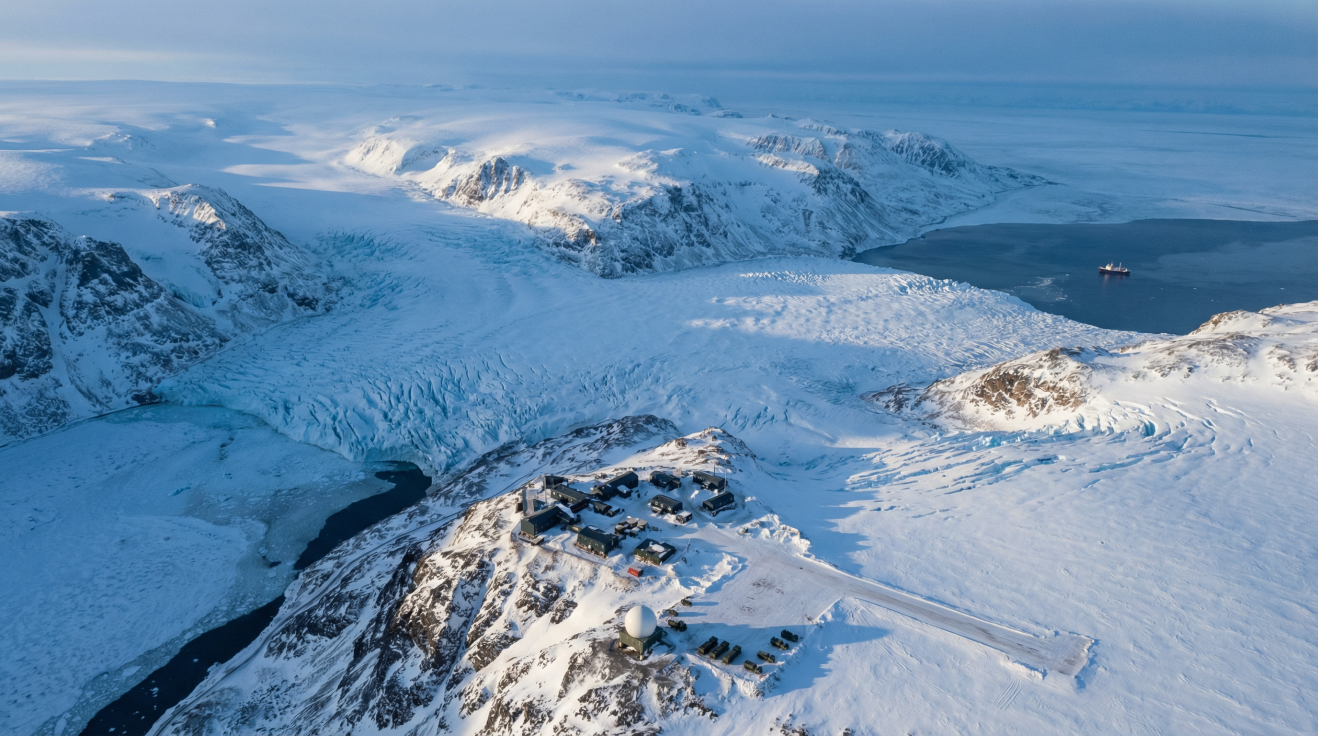
American interest in Greenland is not new, though the intensity and openness of Trump’s pursuit marks a significant departure from previous approaches. The United States attempted to purchase Greenland from Denmark in 1867 and again in 1946, with both efforts ultimately failing but establishing a precedent for American strategic interest in the island. During World War II, the US established military bases in Greenland with Danish consent, and the Thule Air Base has remained an important component of American missile warning and space surveillance systems throughout the Cold War and into the present era.
Greenland’s strategic value has increased dramatically in recent decades as Arctic ice melts due to climate change, opening previously inaccessible shipping routes and making the island’s substantial mineral and rare earth deposits economically viable to extract. The Northwest Passage, which could become a major commercial shipping route connecting the Atlantic and Pacific oceans, passes through waters near Greenland, giving whoever controls the island significant influence over this emerging trade corridor that could rival the Suez and Panama canals in strategic importance.
The island’s geographic position between North America and Europe makes it valuable for military purposes, providing potential locations for radar installations, missile defense systems, and air bases that could monitor and potentially intercept threats from Russia or other adversaries. As great power competition intensifies and the Arctic becomes increasingly militarized, Greenland’s location offers the United States strategic advantages that would be difficult to replicate through alternative means.
Greenland also possesses substantial deposits of rare earth elements, uranium, and other minerals that are essential for modern technology and defense applications. China currently dominates global rare earth production, creating supply chain vulnerabilities that American policymakers view as national security threats. Acquiring Greenland would provide the United States with direct access to alternative sources of these critical materials, reducing dependence on potentially adversarial nations and strengthening America’s position in technological competition.
The island’s relatively small population of approximately 56,000 people, predominantly Inuit indigenous inhabitants, makes it theoretically easier to acquire than more densely populated territories, though this calculation ignores the complex questions of self-determination and indigenous rights that any transfer of sovereignty would necessarily engage. Greenland’s existing political status as a semiautonomous constituent country within the Kingdom of Denmark, with control over most domestic affairs but with foreign policy and defense remaining Danish responsibilities, creates ambiguities that the Trump administration has sought to exploit.
The Pressure Campaign: Threats, Inducements, and Diplomacy
Trump’s approach to acquiring Greenland has combined multiple pressure tactics applied simultaneously to create a sense of inevitability and overwhelm resistance from Danish and Greenlandic officials. Trump threatened to seize Greenland “the hard way,” implying military force after US troops seized control of key facilities, according to reports from early January 2026 that suggested the administration was seriously considering unilateral action if diplomatic efforts failed to produce desired results.
The military threat, while likely intended primarily as psychological pressure rather than genuine preparation for invasion, represented an extraordinary escalation in relations between NATO allies and raised alarm throughout Europe about American respect for sovereignty and international norms. The threat was accompanied by increased US military activity in the Arctic region, including naval exercises, bomber flights, and the deployment of additional forces to existing American bases, creating ambiguity about whether Trump’s warnings represented bluster or genuine intent.
Simultaneously, the administration pursued economic inducements designed to make American acquisition attractive to Greenlanders themselves. US officials have discussed sending lump sum payments to Greenlanders as part of a bid to convince them to secede from Denmark and join the United States, according to Reuters reporting on internal administration deliberations. The proposed payments, potentially ranging from tens of thousands to hundreds of thousands of dollars per person, would represent an enormous financial windfall for Greenland’s small population and could fundamentally alter the political calculus around independence and sovereignty.
The economic inducements extended beyond direct payments to include promises of massive infrastructure investment, improved social services, and integration into the American economy that would provide Greenlanders with opportunities unavailable under Danish sovereignty. Trump administration officials have suggested that Greenland could become America’s 51st state or potentially a territory with special status, with details to be negotiated but with the promise that Greenlanders would enjoy the benefits of American citizenship and economic dynamism.
Tariff threats represented another dimension of the pressure campaign, with Trump warning that Denmark and other European nations could face punitive trade measures if they continued to resist American demands regarding Greenland. These threats were calibrated to create divisions within Europe, with some nations potentially willing to sacrifice Danish interests in Greenland to avoid broader economic consequences for themselves. The tariff threats were eventually dropped following the “framework deal” announced in late January, suggesting that Danish concessions had been sufficient to satisfy immediate American demands.
Greenland’s Response and the Question of Self-Determination
Greenlandic officials have attempted to navigate the intense pressure from Washington while maintaining their commitment to sovereignty and self-determination. Greenland says red lines must be respected as Trump pushes for acquisition, with the island’s PM stating that sovereignty is non-negotiable despite Trump’s claims that an agreement would give the US full access with “no end, no time limit” to Greenland’s territory and resources.
The Greenlandic government, led by Premier Múte Bourup Egede, has emphasized that any changes to Greenland’s political status must be decided by Greenlanders themselves through democratic processes rather than imposed by external powers or negotiated between Denmark and the United States without Greenlandic consent. This position reflects both principled commitment to self-determination and practical recognition that Greenland’s small population and limited economic resources make it vulnerable to pressure from much larger and more powerful nations.
Public opinion in Greenland regarding potential American acquisition appears divided, with some residents attracted by the economic opportunities and infrastructure investment that US sovereignty might bring, while others fear loss of cultural identity, environmental degradation from resource extraction, and subordination to a distant government in Washington that may have little understanding of or interest in Greenlandic concerns. Indigenous rights organizations have expressed particular concern that American acquisition could threaten traditional ways of life and marginalize Inuit voices in decisions about land use and resource development.
The question of whether Greenland could legally secede from Denmark and join the United States involves complex constitutional and international law issues. Under the present constitutional arrangement established in 2009, Greenland has the right to declare independence from Denmark through a referendum, but such independence would not automatically result in American sovereignty. A separate process would be required for Greenland to then join the United States, potentially involving negotiations, treaties, and approval by both Greenlandic and American legislative bodies.
Denmark’s position has evolved from outright rejection of American acquisition to a more nuanced stance acknowledging that Greenland’s future political status is ultimately for Greenlanders to decide. Danish officials have emphasized their commitment to Greenlandic self-determination while also noting their responsibility to ensure that any transition respects international law and protects Greenlandic interests. The “framework deal” announced in January reportedly involves increased American investment in Greenland’s infrastructure and expanded US military presence, but stops short of transferring sovereignty—at least for now.
International Implications and the Future of Sovereignty
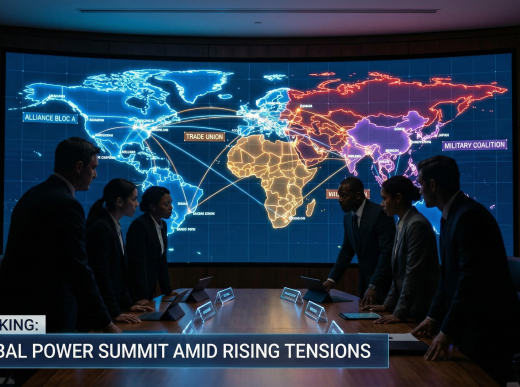
The Greenland situation has generated significant international concern about the precedent it might set for territorial changes in other regions and the resilience of norms against territorial aggression that have underpinned the international order since World War II. Cables show Trump’s moves on Greenland rattled other nations, with particular concern expressed by countries that might themselves become targets of similar pressure campaigns by larger neighbors seeking to expand their territories or spheres of influence.
China has watched the Greenland situation with particular interest, viewing it as potential justification for its own territorial claims in the South China Sea, Taiwan, and elsewhere. A cable from the US Embassy in Beijing suggested that the Chinese government is eager to benefit from Trump’s moves against Greenland by arguing that if the United States can pressure Denmark to cede territory, then China’s claims to disputed areas should be similarly accommodated. This dynamic illustrates how American actions in one region can have ripple effects that undermine US interests elsewhere by eroding the normative frameworks that constrain adversary behavior.
Russia has also expressed concern about the Greenland situation, viewing increased American presence in the Arctic as a threat to Russian interests in a region where Moscow has invested heavily in military infrastructure and resource development. Russian officials have warned that American acquisition of Greenland could trigger an Arctic arms race and increase the risk of military confrontation in a region that has remained relatively stable despite broader geopolitical tensions.
European allies have been particularly troubled by Trump’s approach to Greenland, viewing it as evidence of American willingness to disregard allied interests and employ coercive tactics against partners who have supported US leadership of the Western alliance for decades. The tariff threats and suggestions of military force have reinforced European concerns about American reliability and raised questions about whether NATO can function effectively when the alliance’s dominant power treats smaller members as subordinates whose interests can be sacrificed to serve American objectives.
Few Americans support Trump’s proposed takeover of Greenland, according to Pew Research polling showing that by more than a two-to-one margin, the American public opposes the acquisition effort. This domestic skepticism reflects both principled concerns about sovereignty and self-determination, and practical questions about whether the benefits of acquiring Greenland would justify the financial costs, international backlash, and potential military risks involved in the endeavor.
The Economics of Acquisition
The financial dimensions of acquiring Greenland are staggering and poorly understood by most observers. Buying Greenland could cost as much as $700 billion, according to estimates from economists and policy analysts who have attempted to calculate what Denmark might demand in compensation and what investments would be required to develop Greenland’s infrastructure and integrate it into the American economy.
The $700 billion figure includes not only purchase price but also the costs of building modern infrastructure including roads, ports, airports, and communications networks that would be necessary to support increased economic activity and military operations. Greenland currently has minimal road connections between settlements, with most transportation occurring by boat or aircraft, and its telecommunications infrastructure is limited. Bringing Greenland up to American standards would require investments comparable to those made in Alaska following its acquisition from Russia in 1867, adjusted for modern costs and expectations.
Additional costs would include environmental remediation of existing military sites, compensation for Danish investments in Greenland over decades, assumption of pension and social welfare obligations for Greenlandic residents, and ongoing subsidies that would likely be necessary given Greenland’s small economy and limited tax base. Denmark currently provides substantial financial support to Greenland through block grants that fund much of the island’s government operations, and the United States would presumably need to maintain or increase this support to ensure political stability and public acceptance of American sovereignty.
However, proponents of acquisition argue that Greenland’s resource wealth could ultimately make the investment profitable. The island’s rare earth deposits alone could be worth hundreds of billions of dollars at current prices, and its potential for renewable energy development through hydroelectric and wind power could provide clean energy for export to North America and Europe. Strategic benefits including enhanced national security, control over Arctic shipping routes, and reduced dependence on adversarial nations for critical minerals might justify costs that appear excessive when evaluated purely in financial terms.
The Path Forward: Shared Sovereignty or Continued Pressure
As January 2026 draws to a close, the Greenland situation remains unresolved but appears to be moving toward some form of enhanced American presence and influence short of full sovereignty transfer. The “framework deal” announced following Trump’s Davos speech reportedly involves several key components that could reshape Greenland’s relationship with both Denmark and the United States without immediately changing its formal political status.
Proposals for shared sovereignty arrangements have gained traction among policy analysts seeking middle-ground solutions that address American security concerns while respecting Greenlandic and Danish interests. A shared responsibility and shared sovereignty agreement with the United States and NATO would advance the interests of Denmark in a secure Greenland and a more stable Arctic, according to analysis from the Atlantic Council and other think tanks that have examined potential compromise frameworks.
Such arrangements might involve expanded US military basing rights, American investment in infrastructure and resource development, enhanced security cooperation, and potentially some form of joint governance over defense and foreign policy matters while leaving domestic affairs under Greenlandic control. These models draw on precedents including the US relationship with Palau and other Pacific island nations that have entered into Compacts of Free Association providing for American defense responsibilities in exchange for military access and economic assistance.
However, significant obstacles remain to any negotiated settlement. Greenlandic insistence on sovereignty and self-determination conflicts with American desires for control and certainty about long-term access to strategic locations and resources. Danish concerns about setting precedents for territorial changes within Europe and maintaining credibility as a defender of small nation sovereignty create political constraints on Copenhagen’s flexibility. And Trump’s impatience with prolonged negotiations and preference for dramatic gestures over careful diplomacy could lead to renewed pressure campaigns if progress toward American objectives appears insufficient.
The Greenland situation represents a fundamental test of whether the post-World War II international order based on sovereignty and self-determination can withstand pressure from great powers seeking to expand their territories and spheres of influence. The outcome will shape not only the future of the Arctic but also the broader trajectory of international relations in an era of renewed great power competition and declining respect for the norms and institutions that have constrained conflict and territorial aggression for decades. For Greenland’s 56,000 residents, the stakes could not be higher as they navigate between the competing pressures and promises of the world’s most powerful nations while seeking to preserve their identity, culture, and right to determine their own future.