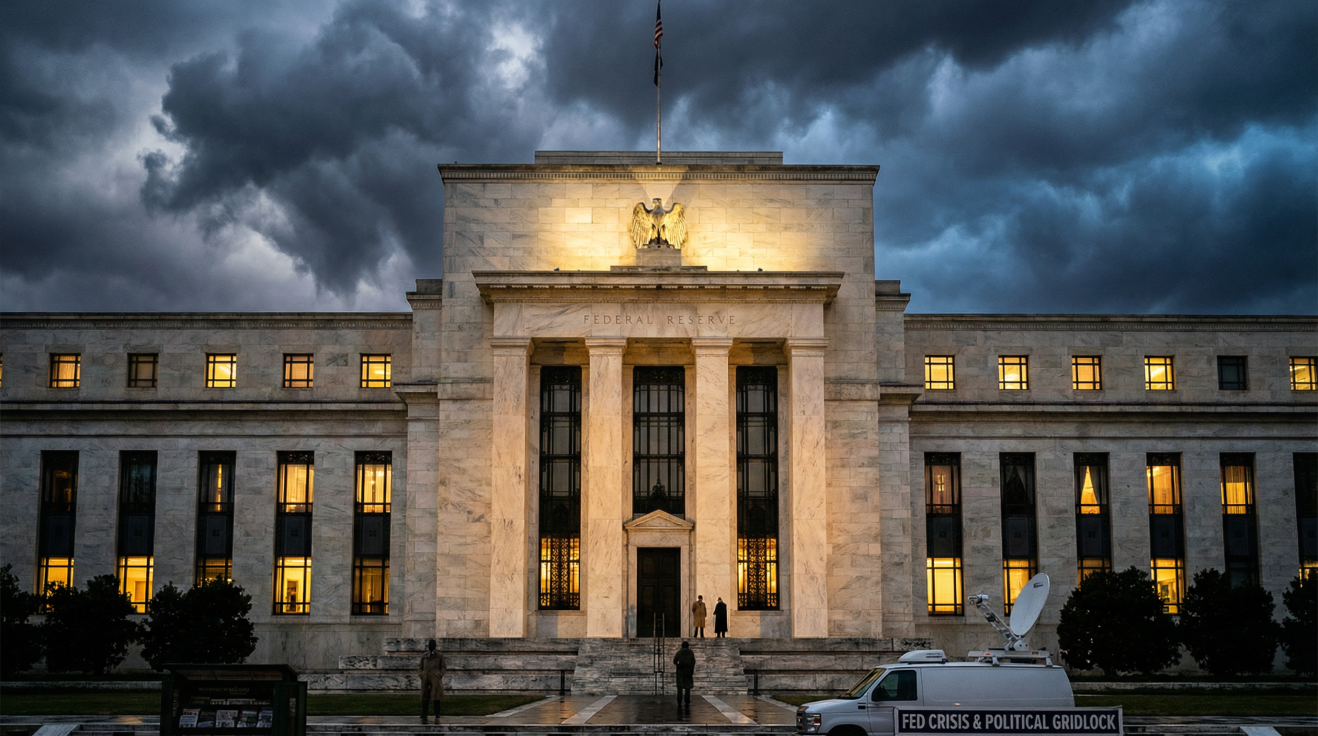
The nomination of Kevin Warsh to serve as Chair of the Federal Reserve has been thrown into turmoil by an ongoing Department of Justice criminal investigation into current Fed Chair Jerome Powell. Senator Thom Tillis of North Carolina, a key member of the Senate Banking Committee, announced on January 30, 2026, that he would not support scheduling confirmation hearings for Warsh until the DOJ investigation is resolved, creating an unprecedented constitutional and political crisis at the nation’s central bank.
“Kevin Warsh is a qualified nominee with a deep understanding of monetary policy,” Tillis stated. “However, the Department of Justice continues to pursue a criminal investigation into Chairman Jerome Powell based on committee testimony that no member of the Federal Reserve Board of Governors was involved in the leak of sensitive market-moving information. Until this investigation is resolved, I will not support scheduling a hearing for Mr. Warsh’s nomination.”
The DOJ Investigation
The criminal investigation into Powell centers on allegations that he provided false testimony to Congress regarding leaks of confidential Federal Reserve information. According to sources familiar with the matter, the probe focuses on whether Powell knowingly made false statements when he testified that no member of the Federal Reserve Board was involved in leaking sensitive information about monetary policy decisions before they were publicly announced.
The investigation reportedly began after evidence emerged suggesting that market-moving information about Federal Reserve policy decisions had been disclosed to private parties ahead of official announcements. Such leaks could allow recipients to profit from advance knowledge of Fed actions, undermining the integrity of financial markets and the central bank’s operations.
Earlier in January 2026, news outlets reported that the Federal Reserve had not yet complied with grand jury subpoenas issued as part of the DOJ investigation. Powell responded to these reports by stating that he would continue to do his job “with integrity and a commitment to the rule of law,” but he did not directly address the substance of the investigation or the subpoena compliance issues.
Kevin Warsh’s Nomination
President Donald Trump announced Warsh’s nomination on January 30, 2026, describing him as “a brilliant mind who will restore independence to the Federal Reserve.” Warsh previously served as a Federal Reserve Governor from 2006 to 2011, giving him extensive experience with the institution’s operations and monetary policy deliberations.
Under normal circumstances, Warsh’s nomination would likely proceed smoothly through the Senate confirmation process. He is widely respected in financial and policy circles, and his previous service as a Fed Governor demonstrates his qualifications for the position. However, the ongoing investigation into Powell has created an extraordinary complication that threatens to delay or derail the confirmation process.
Powell’s term as Fed Chair is scheduled to end in May 2026. If Warsh’s confirmation is delayed beyond that date, it could create uncertainty about leadership at the Federal Reserve during a critical period for monetary policy and financial stability. The Fed plays a central role in managing inflation, employment, and the overall health of the U.S. economy, making stable and credible leadership essential.
Senate Banking Committee Dynamics
Senator Tillis’s position is particularly significant because of his role on the Senate Banking Committee, which has jurisdiction over Federal Reserve nominations. While Tillis alone cannot block the nomination indefinitely, his opposition to scheduling hearings reflects broader concerns among senators about proceeding with a confirmation process while the current chair is under criminal investigation.
The situation creates a complex political dynamic. Republicans generally support Warsh’s nomination and are eager to see Trump’s pick lead the Fed. However, some senators are uncomfortable with the appearance of rushing to replace Powell while he is being investigated, particularly if the investigation relates to his congressional testimony—an issue that directly implicates the Senate’s oversight responsibilities.
Democrats face their own difficult calculations. Many have been critical of Trump’s attacks on Powell and the Fed’s independence, and they may view the DOJ investigation with skepticism, particularly given the Trump administration’s history of conflicts with Powell. However, Democrats must also balance their defense of institutional norms against their substantive concerns about Warsh’s monetary policy views, which tend to be more hawkish on inflation than those of many Democratic economists.
Implications for Fed Independence
The controversy surrounding Warsh’s nomination and the investigation into Powell raises fundamental questions about Federal Reserve independence. The Fed is designed to be insulated from short-term political pressures, allowing it to make monetary policy decisions based on economic conditions rather than political considerations.
Critics of the Trump administration’s approach argue that the DOJ investigation into Powell, combined with Trump’s repeated public attacks on the current Fed chair, represents an assault on central bank independence. They worry that the investigation is politically motivated and designed to pressure Powell or justify his replacement with a chair more aligned with Trump’s preferences.
Defenders of the investigation counter that no one, including the Fed chair, should be above the law. If Powell provided false testimony to Congress, they argue, it would be a serious matter warranting investigation regardless of his position. They maintain that holding Powell accountable for potential misconduct is not the same as undermining Fed independence.
Market and Economic Implications
Financial markets closely watch Federal Reserve leadership transitions because of the central bank’s enormous influence on interest rates, inflation, and economic growth. Uncertainty about who will lead the Fed and when the transition will occur can create volatility and complicate economic decision-making for businesses and investors.
Warsh is generally viewed as more hawkish on inflation than Powell, meaning he would likely favor higher interest rates to combat price increases. This policy orientation could have significant implications for borrowing costs, asset prices, and economic growth. However, the uncertainty created by the delayed confirmation process may be more disruptive in the short term than any policy differences between Powell and Warsh.
Some economists worry that a prolonged confirmation battle could distract from the Fed’s core mission of managing monetary policy and supervising the financial system. The central bank faces important decisions about interest rates and inflation in the coming months, and leadership uncertainty could complicate these deliberations.
Historical Context
While Federal Reserve chairs have occasionally faced criticism and political pressure, a criminal investigation into a sitting chair is unprecedented in the modern era. Previous chairs have testified before Congress numerous times and have sometimes been accused of providing incomplete or misleading information, but these disputes have typically been resolved through political channels rather than criminal investigations.
The closest historical parallel may be the intense political pressure faced by Fed Chair Arthur Burns in the 1970s, when President Richard Nixon repeatedly pressured him to keep interest rates low for political reasons. However, even in that case, there was no criminal investigation of Burns himself.
Path Forward
The resolution of this crisis likely depends on several factors, including the pace and outcome of the DOJ investigation into Powell, the willingness of Senate Republicans to proceed with Warsh’s confirmation despite the ongoing investigation, and the broader political dynamics surrounding Federal Reserve independence and monetary policy.
One possible scenario is that the DOJ investigation concludes before Powell’s term ends in May, either clearing him of wrongdoing or resulting in charges. This would remove the primary obstacle to Warsh’s confirmation, allowing the process to proceed on a more normal timeline.
Alternatively, if the investigation remains unresolved as Powell’s term approaches its end, senators may face pressure to proceed with Warsh’s confirmation to avoid a leadership vacuum at the Fed. However, this could be politically difficult for senators who have expressed concerns about the process.
A third possibility is that the confirmation process becomes so contentious that Warsh’s nomination fails or is withdrawn, forcing Trump to nominate a different candidate. This seems less likely given Warsh’s qualifications and general support among Republicans, but it cannot be ruled out if the political situation deteriorates further.
Whatever the outcome, this episode has already highlighted the tensions between Federal Reserve independence, political accountability, and the rule of law. The resolution of these tensions will have implications not just for the immediate question of who leads the Fed, but for the broader relationship between the central bank and the political branches of government.