The Shadow of War Returns
The United States and Iran stand at the precipice of military conflict as the Trump administration deploys a massive naval armada to the Middle East and issues stark ultimatums demanding Tehran permanently dismantle its nuclear program. The escalating crisis represents the most dangerous moment in US-Iran relations since the 2020 assassination of Iranian General Qasem Soleimani, with both nations engaging in brinkmanship that could ignite a regional conflagration with global consequences.
President Donald Trump delivered an unambiguous warning on January 30, 2026, declaring that Iran must end its nuclear ambitions and halt the violent suppression of domestic protesters or face overwhelming military force from American warships now positioned throughout the region. The stark choice offered to Tehran—negotiate a comprehensive deal or confront military action—has sent shockwaves through diplomatic channels and raised alarm among nonproliferation experts who warn that threats of force may paradoxically accelerate rather than prevent nuclear weapons development.
Iran has responded with equally forceful rhetoric, threatening to instantly strike US bases and aircraft carriers in response to any attack, marking a departure from the carefully calibrated responses that characterized previous confrontations. Iranian officials have made clear that retaliation would not be limited to proportional strikes but could encompass a broader campaign targeting American interests across the Middle East and beyond.
The crisis unfolds against a backdrop of renewed nuclear activity in Iran, with intelligence assessments indicating that Tehran has taken concrete steps to rebuild portions of its nuclear program that could potentially support weapons development. While Iran continues to deny seeking nuclear weapons and insists its program serves exclusively peaceful purposes, the Trump administration has seized upon these developments to justify an increasingly aggressive posture that includes not only military threats but also sweeping economic sanctions targeting regime officials.
Nuclear Program Developments and Intelligence Assessments
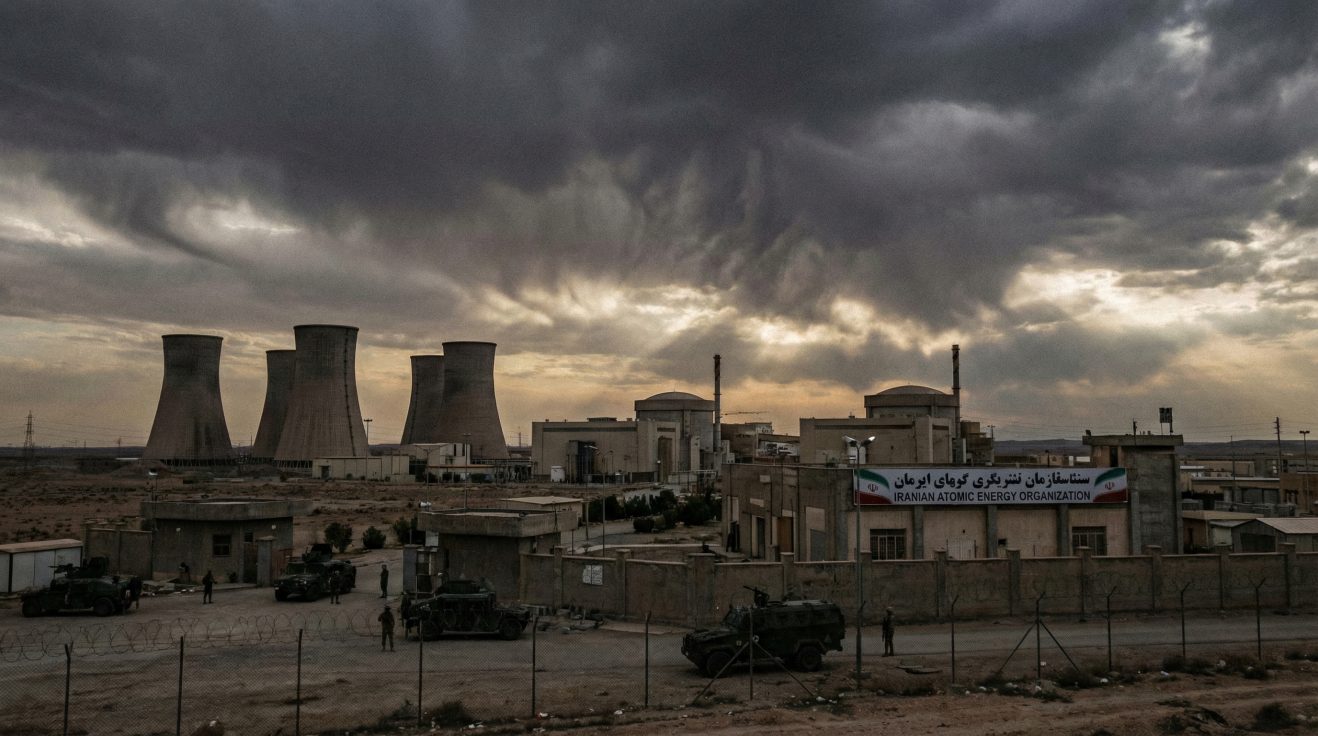
Recent intelligence reports paint a concerning picture of Iranian nuclear activities that have accelerated following the collapse of diplomatic engagement and the reimposition of maximum pressure sanctions. Iran has taken steps to rebuild parts of its nuclear program that could potentially support the development of a nuclear weapon, according to assessments from the Institute for the Study of War and other monitoring organizations that track Tehran’s atomic activities.
The specific nature of these developments remains partially classified, but open-source analysis suggests Iran has expanded uranium enrichment activities, increased stockpiles of enriched uranium beyond levels permitted under the now-defunct Joint Comprehensive Plan of Action, and potentially resumed research into weaponization technologies that would be necessary to construct a deliverable nuclear device. These activities represent a significant escalation from Iran’s previous posture of maintaining nuclear capabilities just below the weapons threshold.
However, multiple intelligence sources have also noted that there is little sign Iran has made significant progress in reconstituting the most sensitive aspects of its nuclear program, leaving questions about the timing and motive behind the Trump administration’s current military threats. The New York Times reported on January 29 that ambiguous evidence and uncertain intelligence assessments have raised concerns among some analysts that the administration may be overstating the immediacy of the nuclear threat to justify predetermined military plans.
Iran’s Supreme Leader Ayatollah Ali Khamenei has issued religious edicts declaring nuclear weapons forbidden under Islamic law, and Iranian officials consistently maintain that their nuclear program serves civilian energy and medical research purposes. Yet the regime’s refusal to provide full transparency to International Atomic Energy Agency inspectors and its continued expansion of enrichment capabilities have fueled international skepticism about Tehran’s true intentions.
The nuclear crisis is further complicated by Iran’s deepening strategic partnership with China and Russia, both of which have provided diplomatic cover for Iranian nuclear activities while pursuing their own interests in the region. A December 2025 agreement saw Russia’s state nuclear agency Rosatom commit to building four civilian nuclear reactors in Iran under a $25 billion deal that Western officials fear could provide additional cover for weapons-related research and development.
Military Buildup and the Threat of Conflict
The Trump administration has backed its diplomatic ultimatums with an unprecedented military buildup in the Middle East that signals serious preparation for potential combat operations. A large US armada of warships has been deployed throughout the region, with vessels positioned in the Persian Gulf, the Gulf of Oman, and the Red Sea to provide multiple axes of attack should military action be ordered.
A US warship recently docked in the Gulf of Aqaba as fears of an imminent Iran strike intensified, positioning American forces closer to potential targets while also serving as a visible deterrent meant to signal Washington’s resolve. The naval deployment includes aircraft carriers, guided-missile destroyers, submarines, and amphibious assault ships capable of launching both air strikes and special operations missions deep into Iranian territory.
Military analysts note that the current force posture resembles preparations seen before major combat operations, with logistics networks established to sustain extended military campaigns and rules of engagement likely pre-authorized to allow rapid response to any Iranian provocations. The positioning of forces suggests the Pentagon has developed multiple contingency plans ranging from limited strikes on nuclear facilities to broader campaigns targeting Iran’s military infrastructure and command networks.
Iran has responded to the American military buildup with its own preparations and increasingly explicit threats of retaliation. Tehran has warned that it will strike Israel and US military bases throughout the Middle East in the event of attacks on Iranian territory, a threat that carries particular weight given Iran’s demonstrated missile capabilities and its network of proxy forces positioned across the region in Iraq, Syria, Lebanon, and Yemen.
American bases in West Asia have been identified as primary targets in Tehran’s retaliation plans, with Iranian military officials making clear that any US attack would trigger a regional conflict that could draw in multiple nations and potentially disrupt global energy supplies. The Strait of Hormuz, through which roughly one-fifth of global oil supplies transit, remains a particular vulnerability that Iran could exploit through mining, missile attacks on tankers, or other asymmetric warfare tactics.
Defense experts warn that a US-Iran military conflict could quickly escalate beyond initial strikes to encompass a broader regional war involving Israel, Saudi Arabia, and other Gulf states. Iran’s ballistic missile arsenal, estimated at over 3,000 missiles of varying ranges and capabilities, poses a significant threat to American bases, allied nations, and critical infrastructure throughout the Middle East. Meanwhile, Iran’s cyber warfare capabilities could target financial systems, energy infrastructure, and communications networks far beyond the immediate combat zone.
Sanctions, Protests, and Domestic Repression
While military threats dominate headlines, the Trump administration has simultaneously intensified economic pressure on Iran through a comprehensive sanctions campaign targeting regime officials responsible for human rights abuses and nuclear activities. On January 30, 2026, the US Treasury Department announced new sanctions against Iran’s interior minister and other officials involved in the violent suppression of anti-government protests that have periodically erupted across the country.
“President Trump stands with the people of Iran and has ordered Treasury to sanction members of the regime,” a Treasury spokesperson declared, framing the sanctions as part of a broader strategy to support Iranian civil society while punishing government repression. The sanctions freeze any US-based assets held by designated individuals and prohibit American citizens and companies from conducting transactions with them, though the practical impact remains limited given Iran’s already extensive isolation from the US financial system.
The sanctions announcement coincided with reports of renewed protest activity in Iranian cities, with demonstrators demanding political reforms, economic improvements, and an end to the theocratic regime’s authoritarian control. Iran’s government has responded with characteristic brutality, deploying security forces to violently disperse gatherings and arresting hundreds of protesters, according to human rights organizations monitoring the situation.
The protest movement in Iran has ebbed and flowed over recent years, driven by economic hardship exacerbated by sanctions, anger over government corruption and mismanagement, and frustration with the regime’s regional military adventures that consume resources while ordinary Iranians struggle with inflation and unemployment. The Trump administration has sought to amplify these internal tensions, calculating that sustained pressure could eventually force regime change or at minimum compel Tehran to accept more favorable terms in nuclear negotiations.
However, critics of the maximum pressure approach argue that sanctions have primarily harmed ordinary Iranians while failing to change regime behavior, and that threats of military action have actually strengthened hardliners within Iran’s power structure by allowing them to rally nationalist sentiment against foreign aggression. The European Union has attempted to maintain diplomatic channels with Tehran while condemning human rights abuses, but on January 29, 2026, EU foreign ministers took the significant step of labeling Iran’s Islamic Revolutionary Guard Corps as a terrorist organization, further isolating the regime internationally.
Diplomatic Stalemate and the Path Forward
Despite the military posturing and escalating rhetoric, diplomatic channels between Washington and Tehran remain theoretically open, though prospects for meaningful negotiations appear dim. The Iranian regime is very unlikely to accede to the United States’ demands regarding nuclear negotiations despite US pressure, according to assessments from the Institute for the Study of War and other regional experts who note that Tehran views nuclear capabilities as essential to regime survival and regional influence.
Supreme Leader Khamenei has publicly stated that dealing with Trump is “beneath” Iran’s dignity, reflecting deep mistrust of American intentions and skepticism that any negotiated agreement would be honored by future US administrations. This stance is reinforced by Iran’s experience with the Joint Comprehensive Plan of Action, which was negotiated during the Obama administration but subsequently abandoned by Trump during his first term, leading Tehran to conclude that American commitments cannot be relied upon regardless of which party controls the White House.
The Trump administration has called for “immediate negotiations” to address not only Iran’s nuclear program but also its ballistic missile development, support for regional proxy forces, and human rights record—a comprehensive agenda that Iranian officials view as tantamount to demanding regime capitulation. Trump has suggested Iran could choose between negotiating “a fair and equitable deal” or facing military consequences, but has provided few details about what terms Washington would find acceptable or what security guarantees might be offered to address Iranian concerns about regime survival.
Nonproliferation experts warn that the current trajectory of threats and counter-threats may actually undermine prospects for preventing Iranian nuclear weapons development. Military action against Iran’s nuclear facilities could set back the program temporarily but would likely drive it deeper underground while eliminating any remaining constraints on weaponization research. Moreover, an attack could trigger a regional war that would make subsequent diplomacy virtually impossible while potentially encouraging Iran to pursue nuclear weapons as the ultimate deterrent against future American aggression.
Alternative approaches suggested by arms control advocates include renewed multilateral diplomacy involving European allies, Russia, and China; phased sanctions relief in exchange for verified nuclear restrictions; and security guarantees that address Iran’s legitimate concerns about regime change efforts. However, such approaches require patience, sustained diplomatic engagement, and willingness to accept less-than-perfect outcomes—qualities that have been notably absent from the Trump administration’s foreign policy approach.
Regional Implications and Global Consequences
The US-Iran crisis unfolds within a broader regional context shaped by the ongoing Israeli-Palestinian conflict, competition between Iran and Saudi Arabia for regional dominance, and the involvement of external powers including Russia and China who view the Middle East as an arena for challenging American influence. Any military conflict between Washington and Tehran would inevitably draw in these various actors and could reshape the region’s geopolitical landscape for decades to come.
Israel has maintained a policy of preventing Iranian nuclear weapons development through any means necessary, including covert operations, cyber attacks, and targeted assassinations of nuclear scientists. Israeli officials have publicly supported the Trump administration’s pressure campaign while privately preparing for potential Iranian retaliation should US military action occur. The possibility that Iran would strike Israeli cities with ballistic missiles in response to American attacks creates a scenario where Israel could be drawn into a broader conflict despite not being the initial aggressor.
Saudi Arabia and the United Arab Emirates, longtime rivals of Iran, would likely support US military action diplomatically while fearing that their own territories could become targets for Iranian retaliation given their hosting of American military bases. The Gulf monarchies have invested heavily in missile defense systems and have quietly normalized relations with Israel in part to create a united front against Iranian regional ambitions, but their vulnerability to asymmetric warfare tactics remains a significant concern.
The concentration of global energy infrastructure in the Persian Gulf region means that any US-Iran military conflict would have immediate economic consequences worldwide. Oil prices would likely spike dramatically as markets price in the risk of supply disruptions, potentially triggering inflation and economic slowdown in energy-importing nations. Insurance rates for tankers transiting the region would soar, and some shipping companies might avoid the area entirely until hostilities cease, creating bottlenecks in global energy markets.
Russia and China have both indicated they would oppose US military action against Iran, though the extent to which they would actively support Tehran remains uncertain. Russia has significant economic interests in Iran and views the country as a strategic partner in challenging American hegemony, while China depends on Iranian oil imports and sees the Islamic Republic as a key node in its Belt and Road Initiative. Both nations could provide diplomatic cover for Iran at the United Nations Security Council, supply advanced weapons systems, or offer economic assistance to help Tehran weather sanctions and military strikes.
The broader implications for nuclear nonproliferation are equally concerning. If Iran is attacked despite not having developed nuclear weapons, other nations might conclude that nuclear capabilities provide the only reliable deterrent against American military action—a lesson that could accelerate proliferation in regions from East Asia to Latin America. Conversely, if Iran successfully develops nuclear weapons despite US pressure, it would represent a catastrophic failure of nonproliferation efforts and could trigger a cascade of weapons development by regional rivals including Saudi Arabia, Turkey, and Egypt.
The Dangerous Calculus of Brinkmanship
As January 2026 draws to a close, the United States and Iran remain locked in a dangerous game of brinkmanship where miscalculation or misunderstanding could trigger a conflict neither side truly desires but both have prepared to wage. The Trump administration appears convinced that overwhelming military threats will force Iranian capitulation, while Tehran believes that demonstrating resolve and threatening massive retaliation will deter American attack.
History suggests that such standoffs can persist for extended periods without resolution, creating sustained tension that becomes the new normal in international relations. However, history also demonstrates that crises can escalate rapidly when unexpected events—a naval incident, a terrorist attack, or domestic political pressures—push leaders toward decisions they might otherwise avoid.
The coming weeks will reveal whether diplomatic channels can be reopened to provide off-ramps from the current trajectory, or whether the logic of military confrontation will prevail. The decisions made in Washington and Tehran during this critical period will shape not only the future of US-Iran relations but the broader architecture of Middle Eastern security and global nonproliferation efforts for years to come.
For now, warships patrol the Persian Gulf, sanctions tighten around Iran’s economy, protesters face violent suppression in Iranian streets, and the shadow of war looms over a region that has already endured decades of conflict and instability. The world watches anxiously, hoping that wisdom and restraint will prevail over the dangerous momentum toward military confrontation that currently dominates the US-Iran relationship.